
Your First Night in an RV: What to Expect and How to Relax
Introduction
We still remember how different that first night in an RV felt.
Even after a full day of driving, setup, and getting settled, there is something about that first evening that makes you extra aware of everything. The sounds feel different. The space feels different. The bed feels different. Every little creak, every passing footstep outside, every hum from the refrigerator or air conditioner can make you think, “Is that normal?”
A lot of new RVers are surprised by that.
They spend so much time worrying about choosing the right RV, learning the hookups, planning the route, and packing the gear that they do not think much about what comes after the engine shuts off and the campground goes quiet. But the truth is, your first night in an RV can feel just a little strange, even if the trip itself is going beautifully.
That does not mean anything is wrong.
It means you are sleeping in a new environment, in a different rhythm, with all the excitement and low-level adrenaline that comes from trying something new. Jennifer and I have talked with many first-time RVers who said the same thing the next morning: “We did not sleep great, but once we got through that first night, everything started to feel easier.”
That is exactly what usually happens.
This guide is here to help you know what to expect, what is normal, and how to make that first night feel less stressful and more enjoyable. If you are brand new to this whole lifestyle, begin with our Start Here guide, where we point you to our best beginner resources, books, and apps. And if you want a better way to organize your whole trip, routes, notes, reservations, and planning details, check out the RV Lifestyle Planning Center. But if your first overnight stay is coming up and you are wondering how to relax once the sun goes down, this article is for you.
1. Why the First Night Feels Different, Even When Everything Is Fine
One of the most reassuring things we can tell you is this: it is completely normal for the first night in an RV to feel a little off.
You are sleeping in a small moving house that is not yet familiar. Even if the bed is comfortable and the campsite is peaceful, your brain knows you are somewhere new. That alone can make you more alert than usual.
Jennifer has often said that the first night in a new place is never really about sleep alone. It is about orientation. You are subconsciously learning the space. Where is the bathroom? Where are the switches? What noises are coming from inside the RV? What noises are coming from outside? That mental adjustment takes a little time.
We have both experienced this, even after years on the road, especially when changing rigs or staying somewhere with a very different environment. A wooded campground sounds different from an open desert site. A private campground has a different nighttime rhythm than a state park. A rainy night sounds different than a still, quiet evening.
All of that is normal.
What many beginners mistake for a problem is often just unfamiliarity. The refrigerator cycles on. The furnace kicks in. Someone closes a truck door two sites over. A dog barks. Wind brushes the side of the rig. The floor shifts a little when someone gets up in the night. None of those things necessarily mean there is an issue. They just mean you are camping.
This is one reason we always encourage new RVers to keep the first trip simple and manageable. Our How to Plan Your First RV Trip Without Feeling Overwhelmed article goes into that in detail, and our Your First RV Trip: The Step-by-Step Beginner Checklist can help make the whole day feel more organized before bedtime even arrives.
The first night feels different because it is different. That is part of the experience. Once you stop expecting it to feel exactly like home, it usually becomes much easier to relax into it.
2. Arrive Early Enough That the Night Does Not Start in a Panic
A stressful first night often begins with a stressful arrival.
If you pull into the campground late, tired, hungry, and rushed, it is much harder to settle in. Everything feels more intense after dark. You are trying to back into the site, find the hookups, get leveled, figure out where things go, and maybe even throw together dinner, all while feeling like the day is already slipping away from you.
That is why Jennifer and I are so big on arriving early.
We have learned over the years that daylight is one of the best gifts you can give yourself on travel day. It makes everything easier. You can see the site clearly. You can check for branches, posts, hookups, picnic tables, and odd angles. You can set up more calmly. You can get inside organized before you are tired.
And most importantly, you can let the evening begin gently instead of trying to force it into place.
We have met plenty of new RVers who thought they were doing fine until that late arrival turned a simple night into a stressful one. The first-night mood is shaped a lot by what happened in the last two hours before bedtime.
This is where the rest of your beginner content cluster really supports the experience. How to Drive an RV for the First Time With Confidence can help you avoid an exhausting travel day, and RV Hookups for Beginners: Water, Electric, and Sewer Made Simple takes some of the mystery out of setup. We also strongly recommend keeping both the RV Lifestyle Departure Guide Checklist and the How to Set Up at the Campground Checklist handy.
A calm night starts with a calm arrival.
Give yourself time. Get the rig settled. Make the bed. Take a breath. Sit outside for a minute if the weather is nice. The first night should begin with exhaling, not scrambling.
3. Make the RV Feel Like Home Before You Try to Sleep
One of the smartest things you can do on your first night is make the space feel lived in before bedtime.
Do not wait until you are half asleep to realize you do not know where the flashlight is, where to put your glasses, how to turn off the overhead light, or whether the bathroom door squeaks like a haunted house. The more you can set things up before dark, the more relaxing the evening becomes.
Jennifer is especially good at this part. She likes to get the bed arranged, put a few key items where we will need them, and make the inside of the rig feel settled. A blanket folded where it belongs, phones charging, bathroom basics in place, a lamp or soft light on instead of full overhead glare, those little things go a long way.
New RVers sometimes spend all their energy on the outside setup and forget that comfort inside matters just as much.
Before evening really begins, make sure you know where these things are:
- your flashlight or small lantern
- your phone and charger
- any nighttime medications
- a glass or bottle of water
- bathroom essentials
- a sweatshirt or warm layer if the temperature drops
- a fan if you use one for sleeping noise or airflow
The goal is not to create a perfect interior. It is to remove little annoyances before they become bigger at bedtime.
This is also where packing smarter helps. Our What to Pack for Your First RV Trip, and What to Leave Home article is all about this, and if you want a ready-made way to organize those decisions, the RV Lifestyle Planning Center and the tools we point to through Start Here can make that first-trip prep much more manageable.
A relaxing first night usually comes from having less to figure out once you are tired.
4. Campground Noises, Creaks, and Sounds, What Is Normal
For many beginners, the sounds are what throw them off most on the first night.
At home, you know what every noise means. In an RV, especially on night one, you do not. So your brain starts investigating everything.
What was that hum? Was that a step outside? Did the RV just shift? Is that wind? Is that the heater? Is someone backing in? Did something hit the roof?
Most of the time, the answer is simple: normal camping sounds.
Campgrounds have their own soundtrack. You may hear people talking quietly outside. You may hear doors closing. You may hear an air conditioner cycling on somewhere nearby, or a dog barking briefly, or a branch scraping lightly in the breeze. Inside the RV, you may hear the refrigerator, the water pump, the furnace fan, or the small settling sounds that happen in any compact living space.
Jennifer and I have both had nights where the first hour felt noisier than it really was, simply because everything was unfamiliar. Once you know what your own RV sounds like, it becomes much easier to tune out.
One thing that helps is not fighting the environment too hard. A small fan, soft white noise, or the natural hum of the air conditioner can make the space feel more familiar. Some people sleep better once they stop trying to make the RV feel silent and instead let it sound like the campground it is.
If you are in a very quiet place, the silence itself can even feel unusual. We have had nights in remote campgrounds where the stillness was almost as noticeable as noise.
The first night is often your nervous system learning the soundscape. By the second or third night, many of those same sounds disappear into the background.
This is also why realistic expectations matter so much in the first year. Our 10 Beginner RV Mistakes That Can Ruin Your First Year on the Road article touches on the emotional side of beginner expectations, and this is one of those areas where a little grace really helps.
Not every sound is a problem. Most are just part of the world you are in.
5. Temperature, Bedding, and Small Comforts Matter More Than You Think
People often focus on the big systems of an RV and underestimate the small comforts that shape a good night’s sleep.
But if you are too hot, too cold, short on blankets, or sleeping in a bed that does not yet feel settled, that first night can feel much longer than it needs to.
Jennifer and I have learned over the years that sleep comfort in an RV comes down to a handful of practical things. Good bedding. Sensible ventilation. Comfortable sleepwear. A nearby layer for unexpected cool air. And a willingness to adjust the setup based on the season and campground.
In many RVs, the temperature can feel a little more variable than at home. Front to back may feel different. A cool evening can turn chilly overnight. An RV bedroom may trap warmth in summer or feel cooler in shoulder season, depending on layout and airflow.
That means it helps to think ahead.
Make the bed before dinner, not after you are tired. Keep an extra blanket within reach. If you like airflow, crack a vent or window if the weather allows. If you use the furnace, know how it sounds and cycles before bedtime so it does not surprise you. If your RV tends to run warm, a small fan can make a huge difference.
We have both found that the simple comfort items matter a lot more than people expect. The right pillow. A soft throw. Warm socks. Your usual bedtime mug of tea. The little routines that say, “We are done for the day now.”
If you are still in the overall beginner setup stage, this is another reason How to Choose Your First RV Without Making an Expensive Mistake matters. Floorplan, bed layout, ventilation, and daily livability affect more than just daytime comfort.
A restful first night is usually not about luxury. It is about a few thoughtful comforts in the right places.
6. The Bathroom in the Night, and Other Things Nobody Tells You
Let us talk about one of the least glamorous but most real parts of your first night in an RV.
Using the bathroom in the middle of the night feels different.
The space is smaller. The path may be tighter. If one person gets up, the other may feel it. You may need to remember where the light switch is, or whether turning on the full overhead light will wake up the whole rig. If you are in a towable or a smaller motorhome, nighttime movement can feel more noticeable than it does at home.
That is normal too.
One reason Jennifer likes getting the inside settled early is because it removes these little surprises. If you already know where things are and have the bathroom ready, the night goes much more smoothly.
It also helps to keep nighttime lighting simple. A small lamp, low light, or battery lantern can be much better than blasting yourself awake with the brightest fixture in the RV. Keeping shoes or slippers easy to reach is smart too, especially if you may be stepping outside briefly or if the floor gets cool.
And yes, if you are new to tank systems, it can feel odd at first using the bathroom in a vehicle. That is exactly why learning the basics early helps. Our RV Hookups for Beginners: Water, Electric, and Sewer Made Simple article takes some of the mystery out of how all of that works, which makes the whole experience feel less strange.
The same is true of daytime setup. If you know the rig is level, the water is connected correctly, and the systems are functioning as expected, you are less likely to lie in bed wondering whether you forgot something important.
That peace of mind is part of sleep too.
The bathroom, the lighting, the movement, all of those things start feeling ordinary very quickly. But on night one, they can feel oddly memorable. That is part of the learning curve, and it passes fast.
7. How to Calm Down After the Adrenaline of Arrival
Sometimes the reason beginners do not sleep well the first night has nothing to do with the bed, the weather, or the campground.
It is adrenaline.
You have driven the RV. Arrived safely. Backed in. Connected water and power. Figured out the site. Got dinner handled. Maybe met the neighbors. Maybe worried a little about whether you had done everything right. Even if the day went well, your mind may still be humming long after the campground quiets down.
Jennifer and I have both felt this. The first-night energy can be a little like traveling overseas, you are tired, but your brain has not quite caught up with the day yet.
That is why it helps to create a gentle evening rhythm.
Do not save complicated tasks for the end of the night. Keep dinner easy. Put things away before you are exhausted. Sit outside for a little while if the weather is nice. Let the campsite start feeling familiar. Talk through the day. Laugh at what felt awkward. Recognize what went well.
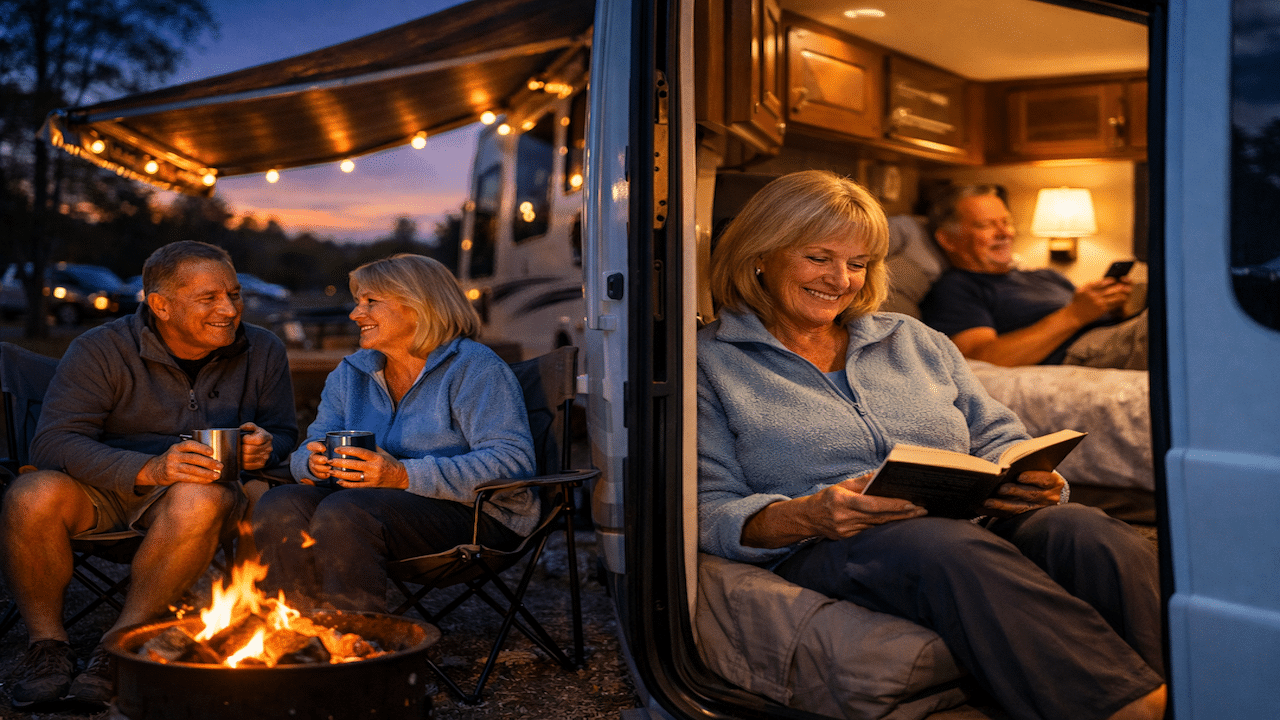
Some of our best first evenings in new places have been the simplest. A quiet walk after setup. A cup of tea. Jennifer reading while I look over the next day’s route. No urgency. No major agenda. Just a chance to let the body realize we are no longer in travel mode.
This is where planning tools can help more than people realize. If you are trying to keep track of routes, campground details, notes, and the next day’s plan, the RV Lifestyle Planning Center can keep those details organized so you are not mentally juggling them in bed.
And if you are still learning the beginner journey overall, the combination of Complete Guide to the RV Lifestyle, How Much Does the RV Lifestyle Cost?, and How to Plan Your First RV Trip Without Feeling Overwhelmed can help reduce the bigger-picture stress that sometimes rides along into nighttime.
Relaxing is easier when the day feels complete.
8. Common First-Night Mistakes to Avoid
Most bad first nights in an RV are not caused by disaster. They are caused by little avoidable choices.
Arriving too late is a big one. Trying to set up in the dark adds unnecessary stress. So does planning a long driving day for your first trip. Another common mistake is making dinner too complicated. By evening, beginners are often more tired than they realize, and a complicated meal can push the whole night into frustration.
Overpacking can also make the first night harder. If the RV is cluttered and disorganized, bedtime turns into a scavenger hunt. Another mistake is not making the bed and organizing the bedroom area before you get tired. The less you have to figure out late, the better.
Some beginners also expect the first night to feel instantly cozy and effortless. Sometimes it does. Sometimes it feels a little unusual. That does not mean the trip is going badly. It just means you are in a new rhythm.
We have talked to a lot of first-time RVers over the years, and one theme comes up again and again: once they got through that first night, the whole lifestyle started feeling more real and much less intimidating.
This is one reason all the beginner articles on RVLifestyle.com are meant to work together:
- Start Here
- Complete Guide to the RV Lifestyle
- How Much Does the RV Lifestyle Cost?
- How to Choose Your First RV Without Making an Expensive Mistake
- How to Plan Your First RV Trip Without Feeling Overwhelmed
- Your First RV Trip: The Step-by-Step Beginner Checklist
- RV Hookups for Beginners: Water, Electric, and Sewer Made Simple
- How to Drive an RV for the First Time With Confidence
- 10 Beginner RV Mistakes That Can Ruin Your First Year on the Road
- What to Pack for Your First RV Trip, and What to Leave Home
Each one helps make the first year feel more manageable.
The first night does not have to be perfect. It just has to be one more step toward feeling at home on the road.
FAQ: Your First Night in an RV
Is it normal to feel nervous sleeping in an RV the first night?
Yes. For many beginners, the first night feels a little unusual because the space, sounds, and routines are unfamiliar. That usually eases quickly once you settle in.
Why is it hard to sleep the first night in an RV?
It is often a combination of excitement, unfamiliar sounds, travel-day fatigue, and mental adjustment. Most first-time RVers sleep better after the first night.
What should I do before bedtime in an RV?
Get the inside organized, make the bed, set out bathroom and nighttime essentials, keep dinner simple, and give yourself time to relax before trying to sleep.
Are campground noises normal at night?
Yes. You may hear footsteps, doors, campground activity, wind, the refrigerator, furnace, or other normal sounds. Most of these become much less noticeable once you get used to them.
How can I make my first RV night more comfortable?
Arrive early, keep setup simple, organize the inside before dark, use familiar bedding and small comfort items, and do not expect the first night to feel exactly like home right away.
About the Authors
Mike Wendland is an award-winning journalist and longtime broadcaster who, along with his wife Jennifer, has spent more than 15 years traveling North America by RV. Together, they are the founders of RVLifestyle.com, the RV Podcast, and the RV Lifestyle Community, where they share trusted advice on RV travel, trip planning, gear, campgrounds, and the realities of life on the road. Their mission is to help RVers, especially beginners, travel with more confidence, clarity, and joy.
More RV Lifestyle Resources to Help You Succeed on the Road
If this guide has sparked your interest in the RV lifestyle, we have created a full ecosystem of resources to help you learn faster, travel smarter, and connect with other RVers who share your passion for the open road.
RV Lifestyle Travel Guides: Expert Pre-Planned RV Trips
Our detailed RV travel guides take the guesswork out of trip planning. Each guide includes scenic routes, must-see attractions, handpicked campgrounds, and daily driving plans designed specifically for RV travelers.
Explore them here:
https://rvlifestyle.com/planningcenter
RV Lifestyle Community: A Friendly Private Community for RVers
Join thousands of RVers in our private online community where you can ask questions, share experiences, get fast answers from experienced travelers, and participate in member-only events, livestreams, and rallies.
Learn more here:
https://rvcommunity.com
The RV Podcast: Weekly RV News, Tips, and Travel Stories
Our weekly RV Podcast features practical advice, industry news, campground discoveries, and inspiring stories from fellow RV travelers.
Listen here:
https://rvpodcast.com
RV Lifestyle YouTube Channel: RV Tours, Travel Tips, and Adventures
Watch RV tours, campground reviews, travel adventures, and practical how-to videos from Mike and Jen as they explore North America by RV.
Watch here:
https://youtube.com/@RVLifestyle
RV Lifestyle Masterclass: Learn Everything About RV Living
Our step-by-step RV Lifestyle Masterclass teaches everything you need to know about choosing an RV, traveling confidently, maintaining your rig, saving money on the road, and building the RV lifestyle you dream about.
Learn more here:
https://rvlifestyle.com/masterclass
Your first night in an RV may feel a little unfamiliar, but that is not a sign that anything is wrong. It is simply the beginning of a new rhythm. Give yourself time, keep things simple, and let that first evening teach you that the road can feel like home sooner than you think.
Be sure to explore these resources and continue learning, traveling, connecting, and growing with us.
Happy Trails!
Life’s Best Chapter Starts Here
in the RV Community

You’ve raised the kids. Done the 9-to-5. Now it’s your time.
Join a private, ad-free community built just for RVers who crave connection, adventure, and meaningful conversation.
- In-person meetups & rallies
- Twice a week member only livestreams and Virtual Campfires that are pure fun
- Exclusive courses on mastering the RV lifestyle
- Real people. No drama. No ads.
- Special interest spaces for more than two dozen RV subjects
Because the open road is better with friends. Check it out here https://RVCommunity.com

