
National Parks Facing MASSIVE Cuts | Campground LOCK FEE RIPOFFS | Our Terrifying Road Incident
This week on the RV Podcast:
- Here we go again, now there is talk of another MASSIVE budget cut for the National Park Service and a proposal to turn some federal land over to the states.
- A New Survey reveals what’s #1 on the Bucket List for campers over 55
- We talk about campground LOCK FEES and why we think they are a RIPOFF!
- And in Mike & Jen’s Storytime… When Things Go Wrong: A Roadway Cautionary Tale
- All this plus the RV News of the Week and your questions coming up in Episode 546 of the RV Podcast.
You can watch the video version from our RV Lifestyle YouTube Channel by clicking the player below.
If you prefer an audio-only podcast, you can hear us through your favorite podcast app or listen now through the player below.
Podcast: Play in new window | Download (Duration: 28:22 — 16.2MB) | Embed
Subscribe: Spotify | Podchaser | TuneIn | RSS
RV NEWS OF THE WEEK
Trump Wants Massive National Parks Budget Cut
President Trump's new budget plan is causing quite a stir, especially when it comes to our national parks.
His proposal would slash the National Park Service budget by almost 25% – we're talking about cutting more than $1.2 billion from their $4.8 billion budget. And get this – he wants to hand over many parks, monuments, and historic sites to the states to manage.
Now Congress has to weigh in on this and as we’ve seen so far this year, what the administration proposes usually ends up being modified, changed or abandoned after a bunch of political wrangling.
Still, this is NOT good news for our National Parks.
And as you can imagine, conservation groups are absolutely livid about this. Theresa Pierno from the National Parks Conservation Association didn't mince words, calling it “an all-out assault on America's national parks.” She thinks it's the most extreme budget proposal for the Park Service in its entire 109-year history.
This comes after the Department of Governmental Efficiency already ordered staff cuts, and Interior Secretary Doug Burgum had floated some concerning plans of his own. Park advocates are really worried about what all this means for the future of these treasured public lands.
But just so you know, this whole budget thing is really just getting started. What Trump's put forward is basically a wish list that shows what his administration cares about, but it's far from a done deal.
Again, Congress has the final say on the budget, and it'll need to approve whatever eventually becomes law. We should get more details when the administration shares their complete budget request with Congress sometime later this month.
If these cuts actually happened, they'd be the biggest the National Park Service has ever faced, and here's something pretty unprecedented – it's the first time any president has suggested transferring national park sites to state control and removing them from the national system. That's not something a president can just do, though – it would likely need Congress to pass a law making it happen.
So there's a long road ahead before any of this might become reality. The proposal is just the first step in what will be months of negotiation and debate.
Bottom line for RVers… travel on. Right now, this is just political noise and won't have any effect on your National Park travel plans this year.
For the 55+ Crowd, National Parks Top Their Bucket Lists
Bouncing off our chat about the possible changes to national park funding is a new survey that shows just how much these treasured spaces mean to people over 55.
According to the latest research from The Dyrt camping app, a whopping 80% of campers over 55 say they are dreaming about visiting a National Park for their retirement adventures.
Beyond just visiting the 63 national parks, what else are older campers planning? About 74% are excited about hitting the open road with no particular destination, while nearly 64% want to discover more free camping spots.
The over-55 RV crowd is already pretty savvy at finding those no-cost camping gems – the report shows nearly 63% of retired campers enjoyed free camping last year, which is more than 11% higher than the average camper.
Popular Pictured Rocks Waterfall Trail Closed After Washout
Hey Michigan outdoor enthusiasts! Heads up if you were planning to visit Munising Falls anytime soon – Mother Nature has thrown us a curveball.
The National Park Service announced that the Munising Falls Trail in Pictured Rocks National Lakeshore is completely closed after a significant portion of the trail was washed away.
According to park officials, about 75 feet of the paved pathway collapsed last week, thanks to a combination of recent heavy rainfall and all that spring snowmelt they've been experiencing. The Park Service shared a photo showing the damage, and it's pretty substantial.
If you're not familiar with it, Munising Falls is one of the most popular spots in Pictured Rocks. It's normally a quick and easy 800-foot walk (one-way) to view the impressive 50-foot waterfall. Perfect for visitors of all ages and abilities.
Unfortunately, park officials were very clear: “There is currently no safe access point to view Munising Falls. Travel in the Munising Falls area is strictly prohibited to protect both visitor safety and sensitive natural resources.”
The Park Service hasn't provided any timeline for when repairs might be completed or when the trail might reopen. If you've been to the UP in springtime, you know how powerful the water can be during the spring thaw!
If you're heading to Pictured Rocks soon, you'll want to adjust your plans and check out some of the other beautiful areas in the park instead.
Cat Miraculously Survives 380-Foot Fall at Bryce Canyon That Claimed Owners' Lives
In a story that's equal parts heartbreaking and miraculous, a feline survivor has emerged from last week's tragic accident at Bryce Canyon National Park.
While two tourists tragically lost their lives after falling 380 feet, rescuers were stunned to discover their cat had somehow survived the devastating plunge.
Officials said the female tabby—estimated to be about 12 years old—was found inside a black soft-sided carrier that, despite being dirty and torn, had “seemed to have weathered the fall fairly well.”
The remarkable survival of this senior cat truly amazed those who investigated the accident. No word yet on what will happen to this resilient feline, but it certainly was an extraordinary escape from a terrible tragedy.
RV CONVERSATION OF THE WEEK
This week we want to have a conversation about an issue that continues to reverberate across the RV community. We talked about this before in the podcast when it first started last year, but the number of campgrounds instituting lock-fees for reserving certain sites is increasing.
We’re reviving this topic because of an email we received this past week from one of our followers named Bruce. He wrote:
I am asking you to cover a topic that is trending in many private campgrounds across the country. The topic is SITE LOCK FEES. This disturbing trend is infuriating many campers who enjoy the lifestyle and may like to travel with friends or relatives.
It is extortion of money under the threat of moving you from your reserved site. I’m sure you are familiar with the process.
With 40 years of RVing experience I am shocked that campers are actually being swindled into paying this fee.
As an example, for you to pay for your site in full 2 months in advance without the lock fee, I can call up the day before you arrive, reserve your site, pay the lock fee, and I have just taken your site from under you.
No way this should be allowed to happen. I have personally asked who decides who gets moved or not and the standard answer is “the computer does the moving”. PLEASE address this VERY hot topic when you can. It is poisoning the industry. – Bruce
We are not fans of lock fees either. I don’t know anyone who uses, except for campground owners and folks with lots of money who don't care about paying more.
So, let’s talk about these so-called “campground lock fees” and why they exist—because, frankly, we’re a bit side-eyeing the whole thing.
A lock fee is basically an extra charge you pay to guarantee you get the exact campsite you picked out when you booked. We’re talking anywhere from $5 to $30, sometimes per day, sometimes a flat rate, depending on the campground. Without paying it, you might book a specific site, but the campground can shuffle you around to another spot of the same “type” (like, same hookups or size) if they feel like it. Sounds like a bit of a bait-and-switch, right?
The rationale, according to campgrounds, is that it’s all about flexibility and fairness. They say it helps them better manage their sites to fit more campers, especially during busy times like Fourth of July or Labor Day.
But here’s where we get skeptical. First off, this feels like a cash grab dressed up as “customer choice.” Campgrounds are already charging you for the site—sometimes $50 or more a night—and now they want extra to actually give you what you thought you were booking? Come on.
Back in the day, you could call up a campground, ask for your favorite site, and if it was free, it was yours—no extra fee. Now, with fancy reservation software like Campspot or Firefly, they’ve automated this whole lock-in process and slapped a price tag on it. Some campgrounds are raking in 20-35% more revenue just from these fees! That’s not pocket change; that’s a serious business model.
And don’t get me started on the “we need flexibility” excuse. If their software is so smart, why can’t it figure out how to assign sites efficiently without nickel-and-diming campers?
It’s not like they’re solving world peace here; it’s just a grid of campsites. Plus, there’s a sneaky downside for campers. If you don’t pay the lock fee, you might end up shuffled to a less desirable site, even if you picked one you wanted for a reason—like being close to the bathroom for accessibility. Charging extra for that feels borderline discriminatory, especially for folks with disabilities who need specific sites for practical reasons.
That happened to us last summer when, with another couple, we booked two adjoining spots in a preferred area of a park in Maine. We booked those spots two weeks out. But when we showed up, the campground assigned the spots we reserved to other campers and offered us two spots, far from each other, in a much less desirable area of the park.
We refused. We also lost our deposit. That’s why we will never do business with a Thousand Trails campground again. I’m still steamed!
Then there’s the argument that lock fees are optional, so what’s the big deal? Sure, you don’t have to pay, but when you’re planning a family trip and want to be next to your friends or secure that one site you love, it’s not really a choice, is it? It’s like airlines charging you to pick your seat—technically optional, but good luck enjoying your flight from the middle seat in the back.
And when even small campgrounds are jumping on this bandwagon, it’s hard to avoid. I’ve seen folks on RV forums calling it a “BS charge” and comparing it to car dealerships tacking on “document fees.”
On the flip side, we get that campgrounds are businesses, and camping’s gotten crazy popular since the pandemic. They’re dealing with higher demand and tighter margins, and lock fees are an easy way to boost profits while giving campers “control.”
But it still stinks of exploiting that demand. If they’re going to charge extra, at least throw in something tangible—like a free bundle of firewood or a better cancellation policy—not just the privilege of getting what you already paid for.
So, that’s the deal with lock fees. They’re sold as a way to make everyone happy, but we’re not buying that it’s all about camper satisfaction. It’s a clever way to squeeze more money out of you while making it sound like you’re the one in the driver’s seat.
Next time you book, check the fine print, and maybe call the campground directly to see if you can sweet-talk your way into your favorite site without the extra hit to your wallet. If not, don’t book there. And tell them why. And tell everyone else about it.
If there’s enough pushback, who knows? Maybe their greediness will be tempered a bit.
What do you think about lock fees? Use the comments below.
SOCIAL MEDIA BUZZ – Wendy Bowyer
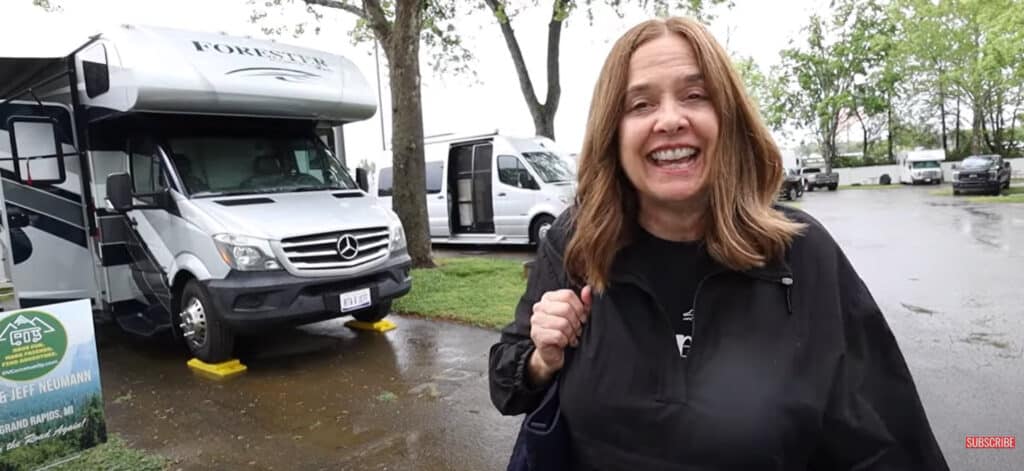
Wendy Bowyer reports on the hot issues most talked about this past week on social media and our RV Lifestyle Community group.
In our RVLifestyle Community we get together to chat LIVE most Thursday nights and Sunday nights, and our conversations last week were filled with information about where everyone was heading off to next – so many exciting camping trips coming up!
And the Buzz on the RVLifestyle Facebook Group was also about trips, but one post from Rebecca really caught my attention. The topic was checklists.
Many RVers have a checklist of everything that needs to be done when breaking up camp. And most people seem to keep this checklist on an app on their phone, or maybe a piece of paper. But Rebecca and her husband have a unique way.
They bought a couple dozen multi-colored popsicle sticks, and with a black marker wrote down one chore per stick that needed to be completed when breaking down camp. Rebecca shared a picture of these sticks, spread out on a counter. Picture yellow, green, orange and aqua sticks with chores like TV Strap, HVAC off, lock freezer, toilet lid, and Instant Pot / ice maker on floor, etc. written across.
This method of grabbing a stick, completing the task, and putting the stick in a basket worked so well for them, Rebecca wanted to share the idea with others.
Nearly 200 people commented and most loved the idea. Rebecca said the stick method does a great job of keeping them on task, and they prefer this over a printed list because it is easier to see exactly what needs to be done.
And because this helped so many, I wanted to share it with you.
RV QUESTION OF THE WEEK

QUESTION: “Is it okay to fill my freshwater tank prior to going on a trip? I'm doing some primitive camping and there won't be any water nearby” – Matthew
ANSWER: Hey Matthew! Yeah, it’s totally fine to fill your freshwater tank before heading out for primitive camping—actually, it’s a smart move since you won’t have water nearby. Just make sure your tank is clean and sanitized beforehand to keep the water safe for drinking or cooking. You might also want to bring some extra water in portable containers, just in case, depending on how long you are planning to be out there.
That said, there’s a downside to traveling with a full fresh water tank. A full water tank (water weighs 8.3 lbs per gallon) adds significant weight, reducing fuel efficiency. And if you are traveling over really rough roads for a prolonged period of time, that extra weight bouncing around adds extra strain to the tank holding straps. RVs are supposed to be engineered to handle all that and I wouldn’t be overly concerned unless you are driving an old RV in need of some maintenance.
Storytime: “When Things Go Wrong: A Roadway Cautionary Tale”
MIKE: This week, we have a cautionary tale about how even when you haven't done anything wrong, things can go very wrong very quickly.
JEN: This happened to us on I-75, south of Atlanta, just approaching the Macon turnoff.
MIKE: We were in the right-hand lane, driving just under the speed limit in a Class C motorhome.
JEN: We had just navigated the usually horrid Atlanta traffic and had started to relax. We must have timed our trip right because the traffic jams weren't so bad. We were about an hour away from our destination.
MIKE: There was one car ahead of us and in front of it, a large semi.
JEN: I saw it very clearly. The truck's right rear tire broke off a slab of concrete, maybe two feet by two feet. Like in slow motion, I saw it bounce once, run into the car in front of me, and then bounce off to the other side of it.
MIKE: I couldn't swerve left into the other lane because of traffic. There was a very narrow shoulder, so I turned towards it.
JEN: The concrete smashed into the front of our RV with a loud thud, and I was able to get over to the shoulder and a bit off it into the grass.
MIKE: The car in front of me was occupied by two young girls. Their right front tire was shredded and the side was dented.
JEN: There was a car behind me occupied by an elderly couple. They also lost a front tire… because after hitting us, the chunk of concrete kept bouncing down the road. It was lying just beyond them, out of the traffic lanes in the grass.
MIKE: We had been hit. Hard. But all our tires were fine. As we went down and looked under the RV, we saw that the concrete had hit one of our front stabilizer jacks, bending it back a few inches.
JEN: Later, at the campground, we were amazed to see it still worked and even offered a little leveling help. It was easily fixed at a repair facility.
MIKE: No one was hurt by this.
JEN: But it was really scary. Terrifying.
MIKE: There was nothing any of us in the three vehicles could have done to avoid this. The police officer who responded to all this shook her head and said how incredibly lucky we were.
JEN: And others would have, had that concrete bounced back into traffic instead of the shoulder.
MIKE: The moral of our story is clear: Life can change in an instant on the highway.
JEN: No matter how carefully you drive or how many precautions you take, sometimes danger finds you anyway. So always stay alert, drive defensively, and remember—safety isn't just about what YOU do on the road. It's about being prepared for the unexpected… because the unexpected WILL happen.


The National Parks have always been under funded. The economic benefits to local areas have always far outweighed the funding provided for their maintenance.
I am taking offense to your dramatic and possible fear mongering headlines and even at times, words used in the body of the stories. Latest example is the national Park story….is 25% really worthy of the term “slash”? Would good journalism present a more full spectrum of where moneys in that budget are spent and where others are wasted or frivolous? Just my humble opinion.
I whole heartily agree !