
How to Stay Safe in Storms When Camping in an RV
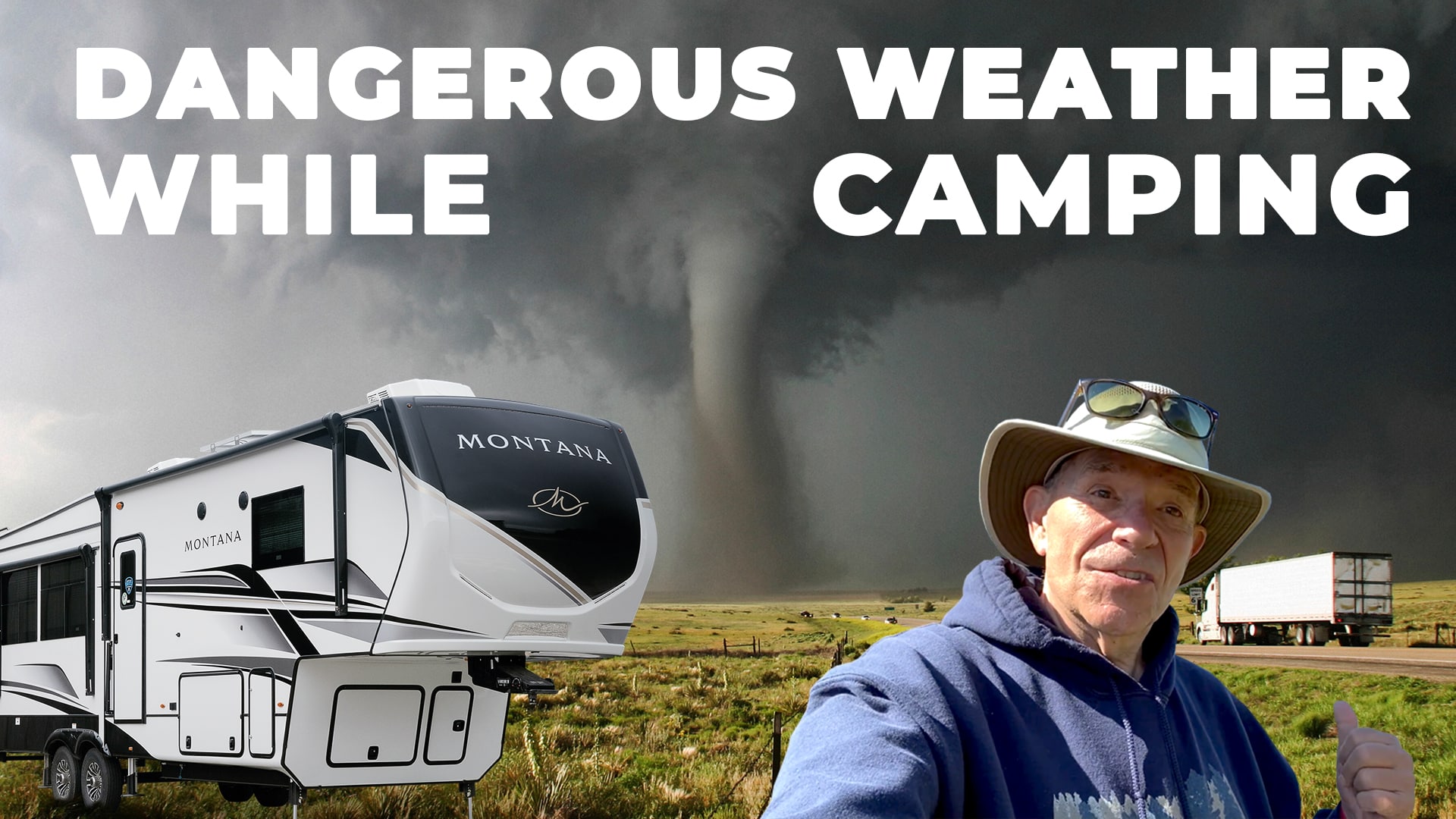
Whether you’re a seasoned traveler or brand new to the road, bad weather can strike fast, and your safety depends on being prepared and knowing what to do when the skies turn dark.
PLUS the Social Media Buzz, The RV Question of the Week, and Mike and Jen's Storytime — The Black Fly Tango!
To see the Video Version of the Podcast, click below:
The audio version is available on your favorite Podcast apps or the player below:
Podcast: Play in new window | Download (Duration: 36:17 — 22.4MB) | Embed
Subscribe: Spotify | Podchaser | TuneIn | RSS
A Terrible Weather Week
This has been one of the worst weeks weather-wise that we have ever seen in our almost 15 years of doing the RV Lifestyle.
Really, the entire year has been plagued by severe storms and dangerous weather. For us, we were dodging blizzards and snowstorms right from the first of the year when we headed down to Tampa and the Florida RV Supershow.
And who would have guessed that Florida would be so hard hit by snow and ice… yes…Florida… snow… that we were stranded in Gainesville because the US 10 east-west route from Tallahassee ot the Gulf Coast was shut down.
But it is the devastation, the loss of life, and the sheer magnitude of the wave after wave of severe weather we’ve seen this spring that has literally taken our breath away.
The tornadoes that hit Missouri, Tennessee, and Kentucky this past week were catastrophic. As we record this podcast, the death toll from just those storms stands at 38. There have been other massive storms in Kansas, Oklahoma, and, in Alabama, a hailstorm that was best described as Apocalyptic.
There was also massive flooding these past few days. In West Virginia, 15 adults, 8 dogs, and 1 cat had to be rescued from their RVs, which were surrounded by flood water, at a campground on Sleepy Creek near Berkeley Springs, W.V.
Michigan was hit hard by big storms, too. Last Thursday night, massive thunderstorms rolled off Lake Michigan and made their way across the entire lower peninsula. There were at least six confirmed tornadoes from that storm. In March, another storm had 12 tornadoes confirmed from a single storm…. in one state.
Now here’s the thing. We are lifelong residents of Michigan. Tornadoes have always happened there. But never on this scale. Never so severe. Never so many, so frequent.
In Thursday’s storm, those strong winds devastated the Schnable Lake Family Campground near the west Michigan town of Allegan, tossing campers and damaging at least 35 of them. No one was hurt, but the damage is every RVer's worst nightmare.
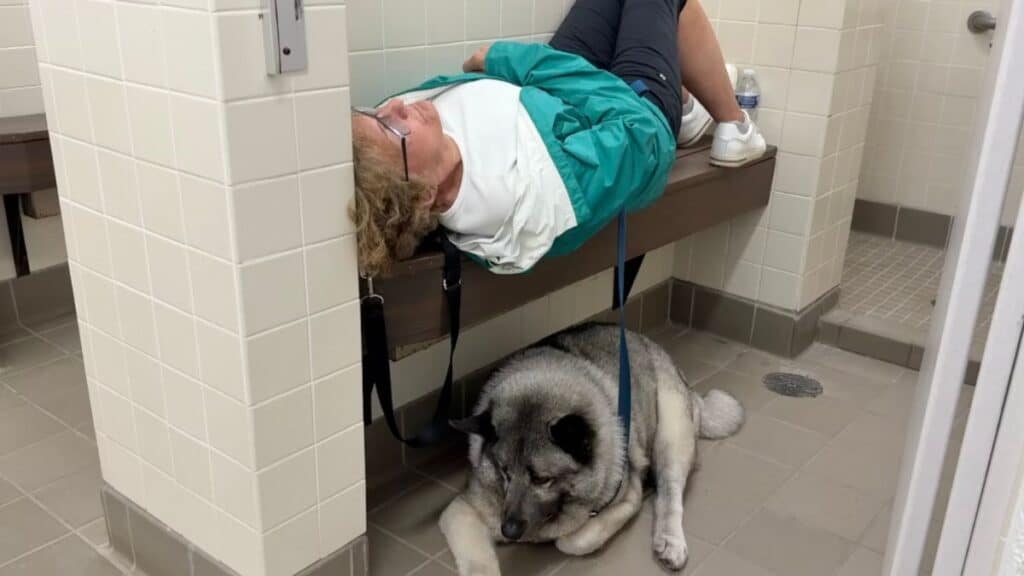
That same night, we were camping across the state in Oakland County, Michigan. The tornado warning sirens went off at about 11:30 and like everyone else at the Addison Oaks Campground, we took shelter in the bathhouse (as you can see below). The all clear was finally sounded about 2 AM. The campground was buffeted by high winds and heavy rain, but we were very fortunate compared to what happened elsewhere across the Midwest and Central States over the past few days.
Why We Need to Talk About Dangerous Weather When Camping
Camping is about enjoying the outdoors—sunny skies, fresh air, peaceful nights. But the reality is, storms, heavy winds, tornadoes, hurricanes, and hail are all part of camping life, and they can be dangerous for RVers. The weather can change unexpectedly, and RVs, being lighter and sometimes more fragile than traditional homes, are at risk during severe weather.
We recently saw a question in our online RV Lifestyle Social Media that really captured this common fear. A member named Lynda wrote:
“Storms… brand new here. Currently riding out our first storm. Kids slept through it, but I’m wide awake, terrified we are going to blow away or tip over! Anything I should be doing? Or just wait it out? So far I don’t like this camping business—the wind is wild, and I feel like I’m on a cruise ship in rough waters.”
This resonated with many, and the response was huge—over 100 comments within hours. We want to share some of that community wisdom with you today, but first, let's cover some key things everyone needs to know about dealing with dangerous weather while camping.
The Basics: Storm Warnings and Staying Weather Aware

First and foremost, bad weather warnings are serious. Don’t take them lightly. When a storm warning is issued, it means conditions are dangerous—especially for RVers.
There are two terms you should know about. Almost always, a Weather Watch precedes a Weather Warning.
A watch means you better be on high alert. Conditions are ripe for severe storms. Often a Watch is issued at least a couple of hours before the predicted storm. But not always. When you hear a Watch issued, immediately know where you will take shelter if it gets worse. You don’t have to take shelter just yet, but you want to have a plan. Know what you will do.
When you hear a Warning issued, it’s time to take shelter. Leave your RV. Do not decide to ride it out. Often, there will be sirens sounded to make sure you know, but a warning is nothing to take for granted. It means the storm is coming, you are in its path, and you’d better take shelter immediately.
Clearly, you need to be very weather-aware. Even in good weather, checking the local forecast a couple of times a day isn't just a good idea, it's essential when camping. There are many weather apps out there, but one we really like is called Drive Weather. It’s perfect for RVers because it lets you compare routes, create trip stops, and adjust your departure times based on weather conditions. Kind of like how pilots check the weather before every flight, Drive Weather helps you decide when and where it’s safest to travel.
There are dozens and dozens of RV apps and, honestly, if you are an RVer and don’t have several, then shame on you. But make sure you have a good forecast app and a live radar app. If you want to see all the apps we use for RV travel, we’ll share a link in the show notes. https://rvlifestyle.com/apps-for-rv-travel/
In addition to apps, we highly advise having an emergency weather radio. These are inexpensive, often solar or hand-crank powered, and can pick up AM/FM, plus all seven NOAA weather bands. A weather radio keeps you informed even if your phone loses signal or power.
But when choosing one, you want it to have battery power and, if possible, solar charging or a hand crank option to keep it operating when the power is out and the batteries die.
Top Weather Tips from Our RV Lifestyle Community

We want to share some of the best advice from RVer members of our online community who’ve been through bad weather:
Jennifer L, who survived a class 3 tornado, advises, “Put your awnings away! We barely made it through our tornado, and since then, I’m obsessed with weather apps and local news. If a storm’s going to get you, it won’t matter what you’re in — I’ve seen what wind can do even to strong buildings.”
Ken recommends, “Set your phone to receive storm notifications. If warnings get severe, don’t hesitate to leave the camper and find real shelter. Many campgrounds’ bathhouses double as storm shelters.”
And Tona, who says she’s from tornado alley (which seems to be most of the country these days), said, “We never camp without first knowing if there’s a shelter nearby. We download the nearest news and weather apps and have even stayed extra days to wait out storms. Having a plan is crucial.”
Chuck H shared some intense firsthand experience: “I’ve survived several campers hit by storms. The pop-up was the worst—the wind flipped the bed right out. A big tree limb almost crushed a neighboring camper. I've had two campers totaled by hail and once was pushed across the road by a strong wind while driving a trailer. We’ve been lucky with guardian angels riding with us.”
Key Safety Tips When Dangerous Weather Hits
Angie, another community member, offered three critical tips:
- Straight-line winds over 50 miles per hour can flip your rig, especially if the wind hits broadside. Be prepared to leave the trailer if winds get that strong.
- If your RV flips, the contents become dangerous projectiles inside the camper. They can cause serious harm.
- Falling trees and limbs can cause catastrophic damage. Even a small branch can penetrate your RV’s walls or roof. A larger tree can be life-threatening.
Michael advises: “Brace your tires and put your stabilizers or leveling jacks down.”
Bob says: “Pull in your slides to reduce wind impact. If possible, orient your RV so it faces into the wind and hook up to your tow vehicle for added stability.”
Nancy adds: “Fill your water tanks. Heavy water adds weight and makes your rig less likely to move in high winds.”
These practical steps can make a significant difference in keeping your home on wheels safe. These are things to do when the area you are in is under a Watch, not a warning. Remember, if a severe storm warning is issued, its too late to prepare. It’s time to seek shelter other than your RV.
Driving Tips in Dangerous Weather

If you’re on the road and need to navigate through heavy winds or storms, there are extra precautions to keep in mind. We have a detailed post with 10 tips for driving an RV in heavy winds — be sure to check it out.
But in brief: slow down, keep a firm grip on the steering wheel, avoid sudden braking or acceleration, and watch for debris on the road.
If conditions worsen, find a safe place to stop until it passes.
The Importance of Being Prepared and Having a Plan
Camping is an adventure, but you always need to have a plan for bad weather. Obviously, know where the nearest storm shelters are at the campground. Have a backup location—like a local building or even your tow vehicle.
Listen for changing weather radio alerts, and never hesitate to evacuate your campsite early if severe weather threatens. We were in New Mexico when a bad hailstorm was predicted for that night. We checked the information on the storm and opted to drive another four hours out of the affected area. And it turned out that was a great decision because a lot of RVs were severely damaged by hail in that very campground we had planned to stay.
Above all, keep your family, including pets, safe and together.
How You Can Join the Conversation and Stay Supported
Our RV Lifestyle Community is an amazing community of experienced RVers who share advice, answer questions, and support each other. If you haven’t joined yet, we encourage you to do so. It’s free and a great place to get real-time help and tips.
We even have a special area set up in the community devoted specifically to Weather for RVers.
Have you discovered Max Velocity yet?

One last thing. We mentioned the importance of having weather apps and an emergency RV weather radio. But another resource we have been using this year – we learned about it, in fact, from our RV Community’s Weather for RVers space – is the YouTube channel called Max Velocity.
Now there are a bunch of YouTube storm chasers and weather geeks with their own channels. We’ve watched and appreciated many. But Max Velocity is in a league all by himself.
Max is a 22-year-old young man from Texas who lives, breathes, and livestreams the weather. He started doing this in high school at the age of 17 and is in the midst of taking his final exams for a meteorology degree.
But his detailed forecasts are the most accurate we've ever seen. He livestreams every serious weather situation, and we promise that if you watch him, you’ll know what to expect.
Weather can be unpredictable and sometimes downright scary when you’re camping, but being informed, prepared, and calm makes all the difference.
SOCIAL MEDIA BUZZ – Wendy Bowyer

Wendy Bowyer reports on the hot issues most talked about this past week on social media and our RV Lifestyle Community group.
In our RVLifestyle Community, many members are out camping, sharing pictures of their adventures that are so much fun to see!
And in our RVLifestyle Facebook Group, we had a couple of posts that just got hundreds and hundreds of responses, and one of those was from Dora. Dora asked: “What have you done to keep someone from running into the arms of the awning? My boyfriend is 6'3″ and seems to like to run into it.”
Some people recommended Dora hang towels on the awning arms, others said to tie a red bandana, but by far, the number one suggestion was to use a pool noodle. Pool noodles can be easily sliced and fit over the arm, and not only are they bright and noticeable, but they add a little cushion if Dora's boyfriend should run into it.
But this whole question got me thinking back to how useful pool noodles can be when you are out there camping. So, just for fun, I have a list of five ways Rvers can use pool noodles while camping.
1. Pool noodles can make your slideouts safer.
Some slideouts are at a height that is just tall enough to smack your head or any other body part on. (In fact, I know this from personal experience!) So by putting a pool noodle over the sharp edges of a slide, you can make those edges much safer and increase your chances of avoiding them.
2. Tent Line covers.
You can use pool noodles over tent ropes to prevent others from tripping over them. This can be very helpful, especially at night.
3. Chair stabilizer.
If you are camping in an area with soft dirt, loose gravel, or sand, you can cut a pool noodle to help. Just cut the noodle the same length as the chair rails sitting on the dirt. Then slip the noodle over the bottom rail of your chair and voila! You have a cheap and effective chair stabilizer.
4. Protect fishing poles
If you enjoy fishing when camping, you can use a pool noodle to cover your fishing poles while in transit. This is a great way to prevent those lines from tangling and protect your pole during transit.
5. Fridge or cupboard transit cushion
You can use a pool noodle to protect items in your cupboard or frig from rattling, rubbing or hitting each other while traveling down bumpy roads. No matter how carefully you pack the frig or the cupboards, things do move around while traveling and a pool noodle can help. They are flexible so you can bend them around items or you can cut them to size. This will help keep everything in place so it doesn't slide around or, worse yet, break.
So those are just a few helpful suggestions for pool noodles. I hope it will help Dora with the awning arm question and others. We have a blog article on helpful pool noodle uses where you can read more here.
RV QUESTION OF THE WEEK
QUESTION: Do people use CB radios anymore? Thinking about mounting one of a few that I have before my road trip to SC. I know truckers still use them but what about RV'ers? – Coty
ANSWER: A few. But not a lot. And what you do hear will be a lot of static, a lot of profanity, a lot of foreign languages from many of the truckers on our road who are recent immigrants. If you are stuck in a traffic jam, you may be able to discern some useful info on why the slowdown is there and how to get around it, but, truthfully, the traffic app Waze or Google Maps does a better job of that.
I’m a ham radio operator and I do travel with a UHF/VHF ham radio and also a GMRS family radio but there’s very little if any useful road information on those radios, either. Family radio handhelds are helpful to stay in touch if you are traveling with others caravan-style, but in terms of traffic information and road condition reports, none of those radios are very helpful.
MIKE & JEN’S STORYTIME

JEN: This story stems from something we heard on a livestream we did Sunday night for our RV Community members. Dick and Colleeen, two of our members who live in Michigans Upper peninsula, let us know that the flies are back.
MIKE: The notorious black flies of the Upper Peninsula.
JEN: Perhaps you have heard about them. Here’s the story of our first encounter.
Mike: We call it:
The Black Fly Tango: A U.P. Camping Tale

JEN: This happened while camping on the Lake Superior shore near Munising in Michigan's Upper Peninsula. It was… memorable, to say the least.
MIKE: That's one way to put it. When we first pulled up to our campsite, I was in awe. Lake Superior stretched out before us, this endless expanse of pristine blue water. The pictured rocks in the distance. Perfect weather. I turned to Jen and said, “We found paradise!”
JEN: It really was picture-perfect. Even our dog Bo seemed impressed, sniffing around and exploring the campsite. We started unpacking, setting up our chairs, getting the grill ready. I remember thinking how peaceful it was.
MIKE: And then the wind shifted.
JEN: It happened so fast. One minute we're admiring the view, the next I'm slapping at something on my neck. Then my arm. Then everywhere.
MIKE: I thought it was just a few bugs at first. But then I looked down and saw my arms. They were covered in these tiny black flies. I started doing this ridiculous dance, swatting at my arms, my legs, my face.
JEN: The infamous “Black Fly Tango,” as we now call it. I joined in immediately with my own version. Arms flailing, spinning around, probably looking like we were having some kind of wilderness meltdown to anyone watching.
MIKE: Meanwhile, Tai, the Norwegian Elkhound we had before Bo, who we thought would be our loyal outdoor companion, took one look at the situation and made a beeline for the RV. Smart dog.
JEN: I shouted after him, “Traitor!” But honestly, I was jealous. I remember looking at my arm and seeing these weren't just any bugs. They were black flies and stable flies. The black flies have this horrible habit of actually slashing your skin instead of just piercing it like mosquitoes.
MIKE: I was doing moves I didn't even know I had. I called one “The Superior Swat” where I'd spin while simultaneously slapping both arms.
JEN: And I perfected “The Munising Mambo,” which involved a lot of hair shaking and rapid shoulder brushing. We must have looked absolutely insane.
MIKE: But here's the weird part. Just when we were about to surrender and join Tai in the RV, the wind shifted again. And they vanished. Just like that. Gone.
JEN: It was the strangest thing. One minute we're being swarmed, the next minute it's perfectly peaceful again. We looked at each other, both mid-swat, and just started laughing.
MIKE: We cautiously resumed setting up camp, eyeing the woods suspiciously like the flies were just hiding, waiting to ambush us again.
JEN: But they didn't come back! We had this beautiful evening. We hiked along the shore, had dinner by the campfire, and even convinced Tai to come back outside. The sunset over Lake Superior was absolutely spectacular.
MIKE: It was perfect. I remember thinking, “Okay, that bug situation was a fluke. This is the real UP experience.” And as the last light faded, I was feeling pretty smug about outlasting the bugs.
JEN: Until night fell completely. That's when we heard it.
MIKE: That distinctive high-pitched whine. But it wasn't just regular mosquitoes. These were… different.
JEN: The UP's famous mosquitoes. Locals call them the official bird of the Upper Peninsula. That's how big they are.
MIKE: I'm barely exaggerating when I say I saw one on my arm and thought it was a small drone. These things were huge! And aggressive!
JEN: I looked over at Tai, who had been contentedly lying by the fire, and he was already trotting back to the RV door, giving us this look like, “I told you so.”
MIKE: We lasted about ten more minutes before retreating to the RV ourselves. And even then, some of them followed us in. We spent half the night wielding flashlights and magazines, hunting down mosquitoes in our tiny living space.
JEN: The next morning, I cautiously peeked out the window, half expecting to see a black cloud of insects waiting for us. But it was clear. Beautiful. Not a bug in sight.
MIKE: I was suspicious. I emerged from the RV like I was entering enemy territory. But Jen was right—they were gone.
JEN: The ranger later told us it's like that in the UP. One day they swarm, the next they vanish. No explanation. Just the mysterious ways of UP bugs.
MIKE: We had this gorgeous, bug-free morning. We explored the shoreline, skipped rocks, Tai was having a blast. I started to think maybe the previous day was some sort of hallucination.
JEN: Until around noon when the wind slightly shifted and blew off the lake again.
MIKE: I'll never forget that moment. We locked eyes across the picnic table. We both felt it coming.
JEN: And then they were back. Black fly army, second wave. Tai made it to the RV before we even stood up.
MIKE: But something was different this time. Instead of panicking, we looked at each other and just… laughed. I think I said something like, “May I have this dance?”
JEN: And we just went with it. Full black fly dance mode. Swatting, spinning, laughing like maniacs while being eaten alive.
MIKE: That's when Jen had her profound moment.
JEN: It hit me while doing the “Yooper Shuffle” that this was actually a perfect metaphor for life. The most beautiful places often come with challenges. Discomfort is temporary. And sometimes the best thing to do is just dance through it, even if you look ridiculous.
MIKE: I was impressed. It's not often you get deep philosophical insights while being used as a bug buffet.
JEN: We spent the rest of the trip alternating between bug-free bliss and insect invasions. But we came prepared with head nets, industrial-strength repellent, and our dance moves.
MIKE: Tai spent a lot of time in the RV.
JEN: Can't blame him. But despite everything, it was one of our most memorable trips. There's something about surviving the UP bugs that makes you feel accomplished.
MIKE: The locals told us mid-July through October is much better. Especially September and October, when the leaves are changing and the bugs are mostly gone.
JEN: The moral of our story? The most magnificent destinations don't promise comfort—they promise memories. And sometimes the journey to paradise requires a little dancing along the way.
MIKE: If you're planning a UP trip, don't let the bugs scare you off. All that beauty comes with a cost, but it's absolutely worth it.
JEN: Just make sure your dance moves are ready. And maybe bring a sympathetic dog who won't judge you too harshly.
Bonus Videos: Our UP Bug Vids
We've done a couple of videos for our RV Lifestyle YouTube Channel on the bugs of the UP. If you haven't subscribed yet, please do so when watching these videos.
Here's one we call the “Black Fly Dance.”
And here's one showing Tai and how we tried everything to stop being tormented by those mosquitoes and flies.

