
Do Not Forget Your RV: What To Look For While It Sits Parked
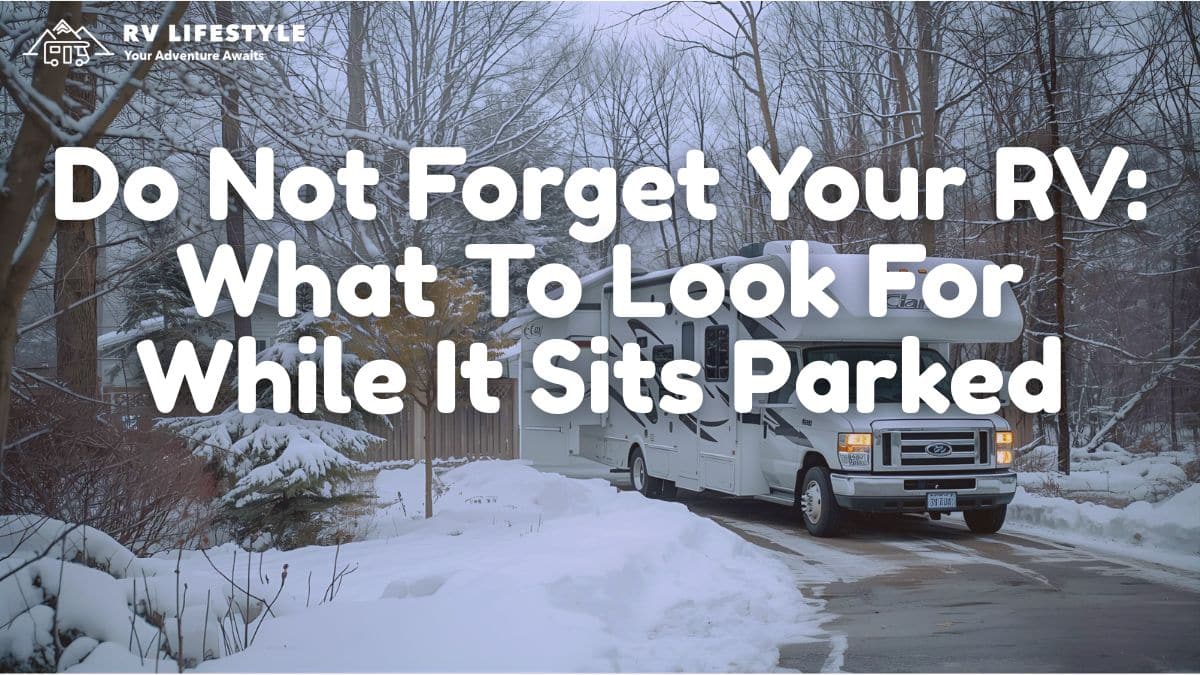
Now that it's December, most RVs in northern climates are put away for the season, in storage, waiting for you to rediscover them come springtime – like a gym membership after New Year's resolution season ends.
RVs age in storage the way old houses do. Nothing dramatic, just slow, sneaky changes that turn into bigger problems if nobody looks in on them. Think of this like checking on an elderly relative who insists they are fine, even while the roof leaks and the fridge smells like a biology project.
Here is what to check while your rig is still in storage.
Visit the RV Regularly
Do not wait three months and hope for the best. Drop in every couple of weeks. Walk around it. Go inside. Let it know it has not been abandoned to Michigan (or wherever you live) winter misery.
Your eyes, ears, and nose will find issues long before anything mechanical does.
Slides: Store In, Open Only for Inspections
Always store the rig with slides closed. This protects the seals, reduces exposure, and keeps critters from seeing your RV as the deluxe open concept model.
When you visit, it is fine to run the slides out for a few minutes so you can inspect the interior. Listen for grinding or hesitation. Anything struggling now will get worse later.
Close them again before you leave.
Batteries: Let Them Sleep
Lithium batteries are the introverts of the RV world. Leave them alone and they wake up fine.
Lithium batteries handle storage well with minimal attention. They have very low self-discharge rates (typically 1-3% per month) and don't require maintenance charging during winter storage. Just ensure they're stored with a charge between 50-80% and that their Battery Management System (BMS) remains functional.
Lead acid batteries are more demanding. If properly maintained (fully charged, water levels topped off for flooded types) and disconnected, they can handle storage but will self-discharge at 3-5% per month. Many RVers use a battery maintainer or solar trickle charger to prevent sulfation during long storage periods.
Regardless of battery type, open the battery compartment before storage and check for:
- Corrosion on terminals (white, blue, or green buildup)
- Swelling or bulging (indicates a failing battery)
- Loose connections
- Signs of leaking (especially with lead acid)
This quick inspection takes 20 seconds and can catch problems before they become expensive repairs.
Roof and Leaks: Your Top Priority
Ideally, you checked the roof before storage season, but life happens.
On each visit:
- Do a visual inspection from ground level and make sure nothing obvious – like a big tree branch – is sitting up there.
- Look for water intrusion around ceiling corners.
- Press gently on the ceiling for soft spots.
- Check inside cabinets near exterior walls.
- Scan for staining or discoloration.
Roof leaks do not suddenly appear; they quietly get worse while you are not looking. Catching them early is everything.
Critter Patrol
Storage season is open enrollment for mice, squirrels, and whatever else the woods cough up.
On each visit:
- Open every drawer and cabinet.
- Check under beds, inside the oven, and behind cushions.
- Look for shredded insulation, droppings, or chewed fabric.
- Check furnace intake and water heater bays from the outside.
If something moved in, you want to know before spring.
Interior Smells: Trust Your Nose
Walk in and sniff. Your nose will tell you if something went wrong before you even flip a light switch.
- Check for mildew near windows.
- Inspect floor corners for dampness.
- Look at wall seams for bubbling, peeling, or warping.
Strange smells usually mean moisture, mold, or critters. None of these improve with time.
Refrigerator: The Trouble Magnet
An RV fridge sitting closed for months is a horror movie waiting to happen.
- Store with doors propped open.
- Use a deodorizer, moisture absorber, baking soda, or both.
- Each visit, check for mold, mildew, and mystery fuzz.
If it smells off, clean it before the ecosystem evolves legs.
Generator: The One Thing You Absolutely Must Exercise
Generators deteriorate faster from sitting than from working.
- Once a month, run it for 30 minutes under load.
- Plug in a space heater or microwave to provide that load.
- Check for leaks around the gen bay.
This keeps the windings healthy, the carb clean, and the engine lubricated. Skipping this step is the fastest way to turn a perfectly good generator into an expensive box of regret.
Exterior Check: The Quick Loop
Each visit, do one slow lap around the outside.
- Look for water streaks, delamination, and cracks in the filon.
- Make sure tire sidewalls have no cracks or bulges.
- Verify the roofline trim is still tight.
- Ensure no branches or debris have shifted against the RV.
Storage is not static. Wind, snow load, and time do weird things.
Air It Out
When you visit, open windows for a few minutes and circulate the air. A stale RV turns into a damp RV, and a damp RV turns into the sort of project you do not want.
Bottom Line
Checking on your stored RV should become a routine, simple and fast. You are not waking the rig up; you are just making sure it has not developed any winter personality quirks.
A few quick visits during storage season prevent the big, expensive surprises later. Your spring shakedown will be smoother, your systems happier, and your first camping trip of the year a whole lot less dramatic.
Missed a few of our recent posts? No worries – here you go.
- Why Your RV Tank Sensors Lie to You, and What You Can Do About It
- Traveling Robert: From a Lounge Singer to an RV YouTube Star
- RV Life Is What You Make It – 5 wild stories
This new post was originally shared in our RV Community. If you are not part of the Community yet, now is a perfect time to jump in. Come read the post, share your own life experiences, and join a place where real RV stories are told straight from the road. “I’m BRAND spanking new here….. like 2 minutes new.. I love this already!!” — J&J
Life’s Best Chapter Starts Here
in the RV Community

You’ve raised the kids. Done the 9-to-5. Now it’s your time.
Join a private, ad-free community built just for RVers who crave connection, adventure, and meaningful conversation.
- In-person meetups & rallies
- Twice a week member only livestreams and Virtual Campfires that are pure fun
- Exclusive courses on mastering the RV lifestyle
- Real people. No drama. No ads.
- Special interest spaces for more than two dozen RV subjects
Because the open road is better with friends. Check it out here https://RVCommunity.com

