
RV Industry and Camping Shutdowns, Starlink Mini, and Scary Wildlife Encounters
This week on the RV Podcast:
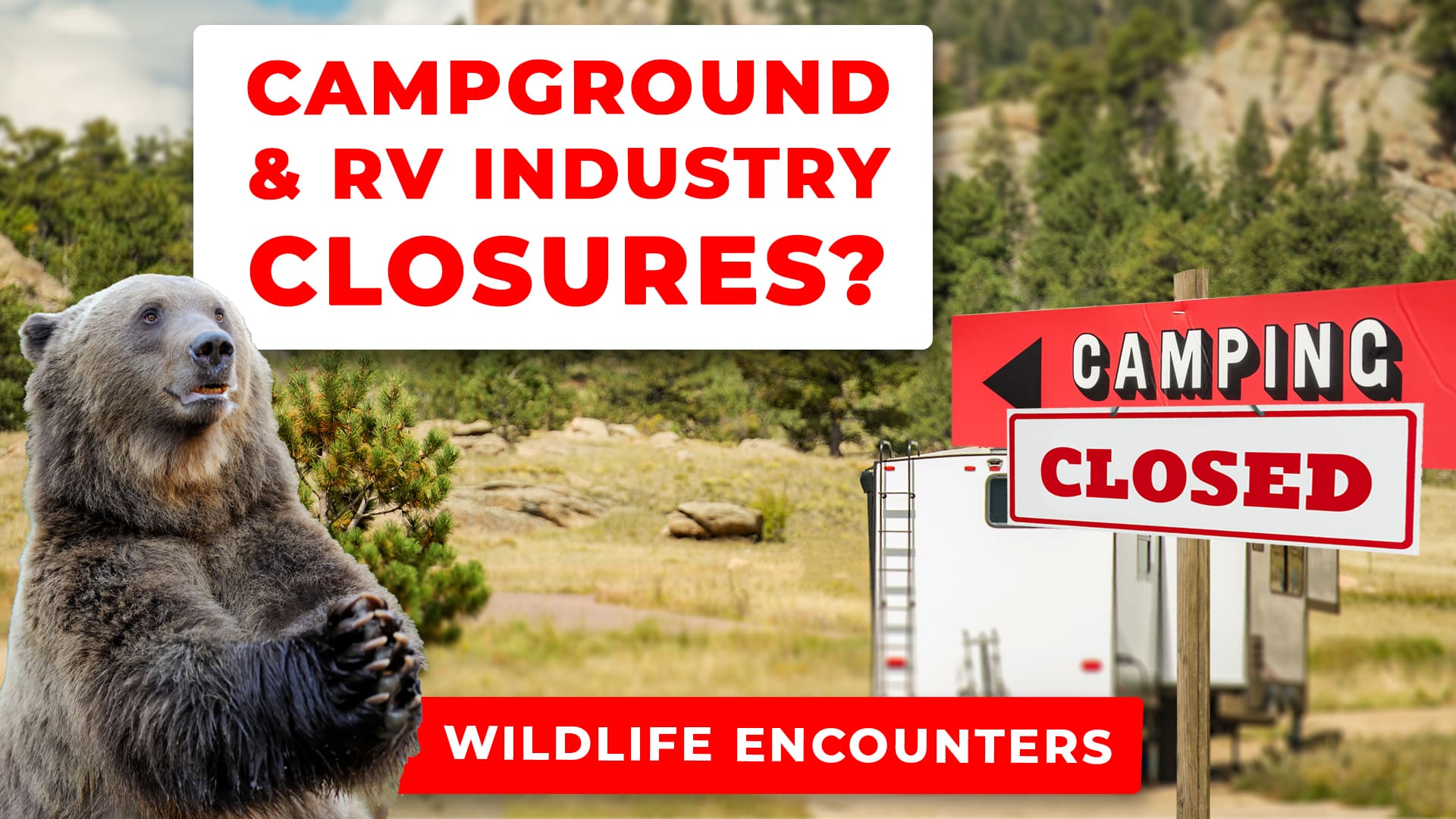
- RV Industry and Camping Shutdowns – We sort through the confusion
- We put a Starink Mini to the test with impressive results despite its small form
- Scary Wildlife Encounters – Why you always need to be alert
- All this plus the RV News of the Week and your questions coming up in Episode 545 of the RV Podcast.
You can watch the video version from our RV Lifestyle YouTube Channel by clicking the player below.
If you prefer an audio-only podcast, you can hear us through your favorite podcast app or listen now through the player below.
Podcast: Play in new window | Download (Duration: 29:46 — 18.6MB) | Embed
Subscribe: Spotify | Podchaser | TuneIn | RSS
Our First RV Community Rally of the Year
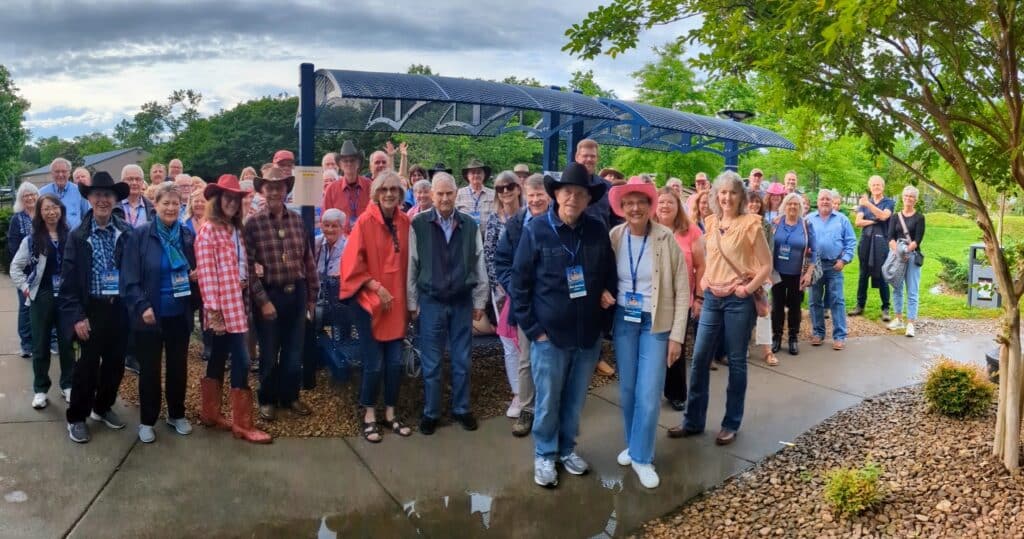
We just returned from a wonderful week in Nashville and our Spring RV Lifestyle Community's Spring Rally.
It was the official start of the 2025 Camping Season for many of our 80 or so attendees, and we attended the Grand Ole Opry, caught lots of music downtown, toured honky tonks, museums and historic spots, and lots of campfire socializing.
In the Social Media Buzz segment in a bit, Wendy will have a special report from the rally and we’ll have a full-length video on YouTube Saturday.
But last week was the first of three rallies we're hosting this year, not counting numerous regional and local events around the country.
If you'd like to attend one of them, check out the RV Community info page at https://rvcommunity.com
Our summer rally is in Northern Michigan, and our fall rally is in Texas.
But it's not just the rallies that make the community so popular…
Join the Movement
We're not just telling you about the RV lifestyle—we're inviting you to become part of a community that celebrates the freedom, challenges, and joys of life on the road. Your unique perspective is what keeps our community growing and thriving.

RV Industry Layoffs are Starting
The big story is what everyone is talking about in Ekhart, Indiana, this week. Elkhart, as many know, is the RV capital of the world. Some 85% of all RVs on the road in North America are made there, and in the wake of tariff worries, market uncertainties, and slower consumer demand, RV manufacturers are feeling a serious pinch.
The first alarming sign of industry concern came last week, when approximately 500 workers at Thor Industries were laid off. Thor is the largest RV maker in the world and has numerous brands.
Those laid off came from three of Thor’s smaller RV subsidiary brands: Heartland Recreational Vehicles, Cruiser RV, and DRV Suites. Heartland and Cruiser make travel trailers. Fifth wheels and toy haulers. DRV Suites is a luxury brand of fifth wheels and toy haulers.
Heartland is closing its less-than two year old plant in Sturgis, Michigan, on June 20, permanently eliminating 121 jobs.
The others are layoffs and are dispersed across two other Heartland plants – in Elkhart and Middlebury, Indiana. The layoffs at Cruiser RV and DRV Suites are from plants in nearby Howe, IN.
Now this all comes at a time when the industry traditionally has some short-term seasonal layoffs and production readjustments between model years. The 2026 models typically begin production in mid-summer.
However, here's what many might consider the irony of all this: First-quarter 2025 RV shipments were up 14%. That's a good sign, right?
A good sign from last year.
Those shipments are for dealer orders placed last summer and fall, before the current tariff confusion and market worries, when everyone was thinking 2025 would be a much better year.
Now, no one is panicking yet. But… there is a lot of worry. If those Trump tariffs remain, it's been estimated that production costs on RVs will rise by as much as 20%.
So the industry is understandably a bit jittery. Such a hike would seriously erode consumer demand. With the 2026 model year production ready to start, all this uncertainty is starting to be more than worrisome. We may very well see some more layoffs from other manufacturers coming as a belt-tightening precaution.
Campground Closures Not as Bad as the Media Makes it Sound
We keep hearing of US Army Corps of Engineer campgrounds, recreation areas, and visitor centers being closed as a result of federal workforce reductions.
Because the news keeps dribbling out and the media is jumping on every possible one. It's all become a bit sensationalized.
Washington, Pennsylvania, North Dakota, South Dakota, Kansas, Missouri, Nebraska and Iowa. That is 8 states. The Corp manages more than 450 campgrounds in 43 states.
Trying to get an exact handle on how many have or will be closed is very challenging. We have seen announcements that about 30 Corps of Engineer locations are affected. That's 30 out of 450.
As far as the 63 National Parks, none are closed to visitors, although some visitor centers and programs like ranger-led hikes or presentations have been curtailed or are operating with reduced hours because of staff unavailability.
Because each park makes its own decisions on what is open and what isn't, it is almost impossible to come up with a master list.
A blog called The National Park Experience, maintained by journalist Bram Reusen, tried. He started to assemble a running list of closures but we suspect he has since tossed in the towel as the most current list on his site is current only as of March 31.
So, while it’s not nearly as bad as the mainstream media may make it appear, there are a bunch of federal recreational areas being affected by the reduced workforce. To find out if the place you want to visit is one of them, you’ll have to call them directly.
Wildlife Encounters are on the Rise!
Spring is the time when wildlife is particularly active. Bears are moving around after a long hibernation. Young are being born and people are heading back to places less visited in the winter.
So reports of dangerous wildlife encounters are coming in.
In Red Rock Creek, Montana, last week, two people were fishing in a Montana creek when a grizzly bear came charging toward them. The pair was fishing in Red Rock Creek on Red Rock Lakes National Wildlife Refuge. State wildlife officials said the bear appeared from thick brush and charged at the anglers.
One of the fishermen pulled out a weapon and shot at the bear, which apparently ran off. Wildlife agents didn't think the bear was hurt. They looked for it but had no success.
Up in the Pacific Northwest last week, a cougar attacked a couple's dog near the Dukabush River Trail in Olympic National Forest. The couple were hiking, setting up camp for the night, when they heard their dog barking, ran and saw their labradoodle pinned by a cougar.
The husband kicked the cougar, which caused it to flee, saving the dog. The pup is traumatized, but recovering.
These stories serve as a reminder to keep your pets on a leash and under control when hiking and camping in the wilderness.
Just goes to show, you never know what’s out there.
Coming up on Mike and Jen’s Storytime at the end of the podcast, we’ll share our most memorable wildlife encounter.
SOCIAL MEDIA BUZZ – Wendy Bowyer
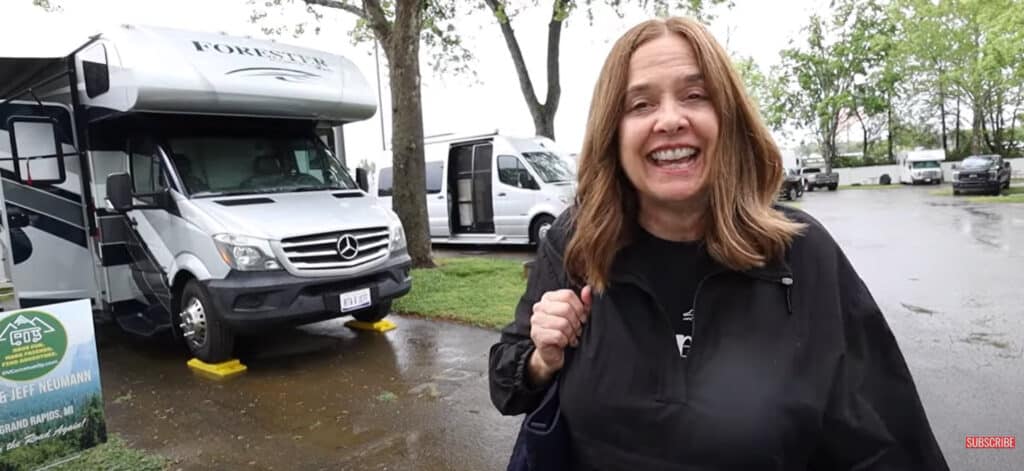
Wendy Bowyer reports on the hot issues most talked about this past week on social media and our RV Lifestyle Community group.
This week Wendy took a video camera with her to document what the “buzz was“ at our spring rally in Nashville. Watch or listen in the players above.
RV QUESTIONS OF THE WEEK
QUESTION: “I noticed a lot of new campers have residential refrigerators…how do you keep those cool while traveling across country or site to site…thanks” Wanda and Todd
ANSWER: RV residential refrigerators are meant to run most efficiently on 110 volt AC power.
To run while unhooked from campground electricity, they work off battery power, which goes into the RV’s inverter that converts 12 volt DC power from the batteries to 110 volts AC power.
If you are in a towable RV, the seven-way power connector between the tow vehicle and the trailer or fifth wheel provides a constant source of 12-volt power that is inverted to keep the fridge running as you drive without drawing on the coach batteries.
Residential fridges on large motorhomes draw on the coach batteries via the inverter. The batteries are constantly being charged while driving through the motorhome’s alternator.

Question: Do you have any information about Cracker Barrel not allowing overnight parking any longer ? Just saw a video about this. Sure hope this is not true as it is always a safe place for overnight parking. Please let me know what you might know about this – Vickie
ANSWER: There is no change in Cracker Barrel’s corporate policy. RVs are still welcome. You saw a story about a Cracker Barrel out west that had stopped allowing RV overnights. That is a local situation only. The city passed a law preventing local businesses from allowing overnight camping because it has been plagued by homeless encampments and petty crime.
Across the country, a growing number of local jurisdictions have enacted similar zoning laws for similar reasons. You might also like to read our post about staying overnight there.
MIKE & JEN’S STORYTIME
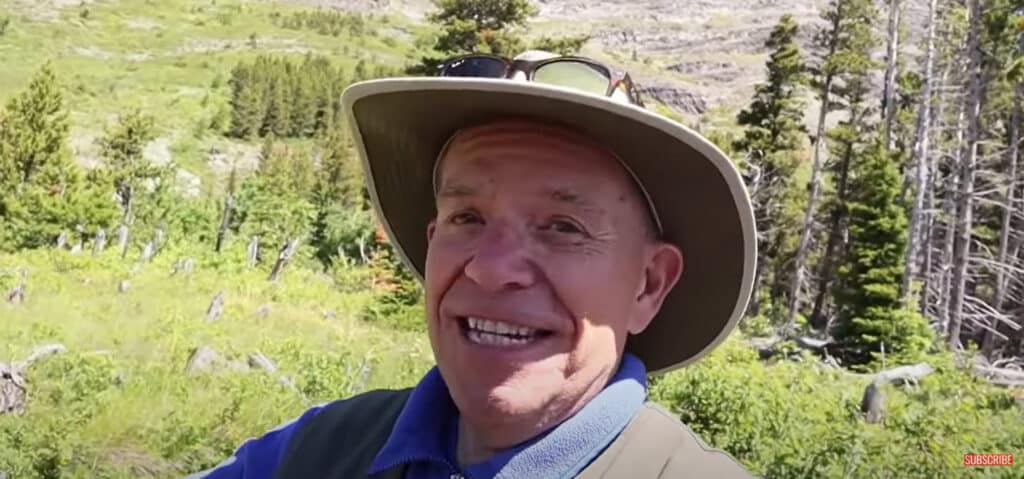
Earlier in the podcast, we reported on some wildlife counters that have campers and hikers on special alert.
This week in Mike and Jen’s storytime, we thought we’d share the story of our most memorable wildlife encounter.
It happened a few years back when we were hosting a gathering at Glacier National Park. We were taking a group of RVers on a short 20-minute hike alongside Swiftcurrent Lake.
There were about 15 of us, strung out single file along a narrow hiking trail that led to the Many Glaciers campground.
We followed safety protocols, insisting everyone carry bear spray as a precaution, though we considered an actual wildlife encounter unlikely given our proximity to the busy road leading to Many Glaciers campground and restaurant.
The narrow trail forced us to walk single file as we admired the breathtaking scenery. Despite our assumptions about the area being too trafficked for wildlife, nature surprised us.
In the thin stretch of forest between the lakeshore and road, we unexpectedly came face-to-face not only with a grizzly bear but two other large animals as well.
While we fortunately didn't need to use our bear spray, the encounter served as a powerful reminder of how quickly assumptions about safety can be challenged in wild spaces.
We had video of the whole encounter, and even those only listening to the audio part of this podcast will be able to understand what happened.
So what’s the moral of this story?
Always respect nature's unpredictability. Even in seemingly tame environments, wildlife follows its own rules, not our expectations. Preparation isn't paranoia—it's wisdom.

