
RV Hot Skin Explained: Safety Changes Coming in 2026
This week on the RV Podcast:
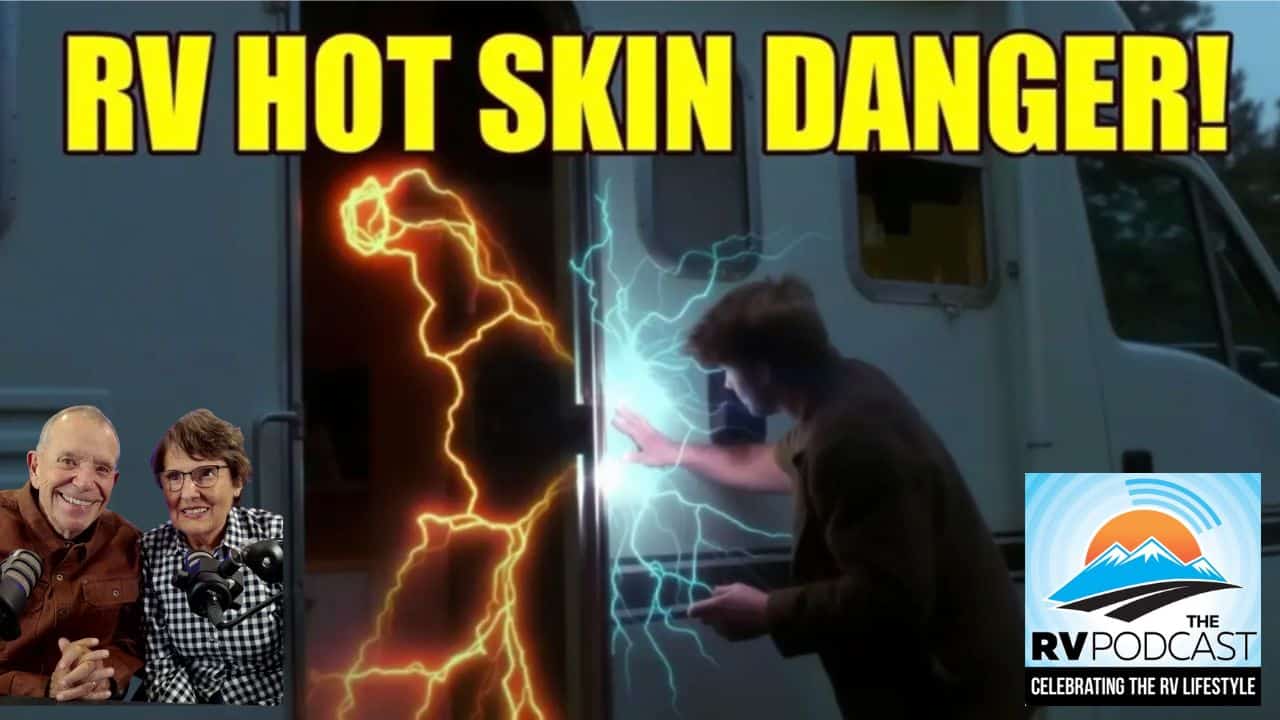
- It’s a real danger you can’t see! Hidden electrical faults and bad power connections at campgrounds. What the industry is doing to protect you! RV Hot Skin Explained…
- In a stunning reversal, General Motors abruptly canceled a highly anticipated technological advancement, leaving a top RV manufacturer and dealers reeling.
- Colder temps mean mice are looking for a new zip code—and your RV is on the map! Protect your investment (and your sanity) before they move in. We’ll tell you how.
- All this plus the RV News of the Week and your questions coming up in Episode #571 of the RV Podcast
You can watch the video version from our RV Lifestyle YouTube Channel by clicking the player below.
If you prefer an audio-only podcast, you can hear us through your favorite podcast app or listen now through the player below.
Podcast: Play in new window | Download (Duration: 39:21 — 23.2MB) | Embed
Subscribe: Spotify | Podchaser | TuneIn | RSS
RV CONVERSATION OF THE WEEK
Have you ever heard of “Hot Skin.” No, get your minds out of the gutter. We’re talking about a serious electrical safety hazard where the RV's metal exterior, metal frame, or other metal components become electrified with dangerous voltage.
It happens a lot in campgrounds all across the country. It’s typically caused by an improper connection at the power pedestal, and it can give you a serious shock when you touch your RV. Hence. “Hot skin.”
Starting in 2026, the RV industry has been mandated to include a device to protect against this. But bad information, sensationalized reporting by those looking for clickbait and genuine confusion have left many RVers wondering what this means to them and, more specifically, whether it’s going to cost them.
To help us sort this out, we turn to our friend Mike Solol, of RVElectricity.com. No one knows more about RV electricity than Mike and, as it turns out, he’s been working on correcting the issue for years.

This part of the podcast is sponsored by RVOvernights, where you can stay free at farms, wineries, and attractions across the country. Go to RVLifestyle.com/rvovernights and use the promo code “RVLDEAL” to save 40% of the already low $49 annual fee.
RV NEWS OF THE WEEK:
GM Throws Massive Wrench in RV Industry's EV Plans
In a surprising move, General Motors CEO Mary Barra announced on October 21st that the company is discontinuing production of the BrightDrop electric van. This comes as Detroit automakers seem to be pulling way back on their EV development.
But this decision has sent shockwaves through the entire RV industry, particularly for one of its largest manufacturers: Coachmen RV, a division of Forest River.
Coachmen had closely tied its fortunes to this innovative vehicle, showcasing it as the RVEX at the recent Elkhart RV Open House.
The RVEX generated considerable buzz, earning rave reviews for its innovative features, full-paint exterior, and impressive estimated 270-mile range. With a projected MSRP of around $150,000, both Coachmen and its dealers had high expectations for the RVEX's success, noting its unique position in the market.
Its appeal was strong enough for RVBusiness to name it a finalist for RV of the Year.
But GM has blindsided the RV industry and validates the concerns of those who believe the EV market, especially for large, specialized vehicles like RVs, is developing slower than anticipated.
This setback will likely slow the pace of electric RV development by months or years as companies search for and test new chassis partners.
The most significant consequence is the immediate loss of the most viable, long-range electric chassis available to the RV industry. Now there are some other auto companies working on RV EVs – like the Ford E-Transit and Ram ProMaster EV. But they currently have significantly less range (closer to 150-200 miles), and that presents a much harder sell to RV enthusiasts who prioritize travel distance.
Now, Coachmen RV must quickly pivot as the platform for its highly anticipated electric model is no longer available. So must dealers, including our friend Nick Schmidt of Sunshine State RVs in Gainesville, FL, who had high hopes for the RVEX. He says the announcement caught everyone in the industry off guard.
SOCIAL MEDIA BUZZ – Wendy Bowyer

Wendy Bowyer reports on the hot issues most talked about this past week on social media and our RV Lifestyle Community group.
Hi Everyone! In our private RV Lifestyle Community this month, we have a monthly theme, and that theme is Give Thanks. It's November and this is a great time to reflect back on the year and be thankful. And let's face it, RVers have a lot to be thankful for! Be it the wonderful places you've discovered, the friends you've made, the adventures you've had – the RV life is pretty amazing. I can't wait to see what's shared.
Then over in our RV Lifestyle Facebook Group, we have had a lot of posts lately about mice! Some want to know how to keep the mice out when the rig is in storage and others ask what to do if you find evidence of mice inside your rig, as in mice droppings.
Mark must be reading all these posts. He just bought his first RV – a travel trailer – and wrote: Is the trailer not built to keep these critters out?
And the short answer? No – you need to take precautions.
So I've read through all of these posts, and there were a lot of them, and compiled some tips to share in case they can help you. The first one is you need to seal up even the smallest holes and in most RVs, there are plenty of them.
Joshua wrote: ” The only guaranteed way is you need to climb under (the RV) and use wire mesh and expanding foam to plug and cover every and any hole.”
Tina has had a travel trailer and class C for a combined 16 years and NEVER had a mouse problem. Her advice? “The key is to make sure there is no hole they can sneak in. Check for holes around the plumbing, and plug anything you see.”
Next remove the things that attract mice like food. Take it all out at the end of the season, and during the season, keep food in air-tight containers mice can't rip open.
Also remove scented things that may attract mice like bars of scented soap.
Many also recommend removing – or placing in an airtight container – all bedding, pot holders, and dish towels because mice love this sort of thing for making beds in the winter.
Next, place mouse traps throughout the inside of the rig. And around the outside of your rig many recommended using Fresh Cab or peppermint oil as a deterrent. Mice do not like the smell of these items.
There was a discussion about poison. Obviously, leaving poison out can kill the mice BUT you then have to worry about what could happen up the food chain. If the poisoned mouse somehow escapes, then gets eaten by say a fox or even a pet cat, you have some unintended consequences.
And there was a big decision on Irish Spring soap, fabric softener sheets, and mothballs. While some say these items help, overall the general consensus was it is not enough by itself – especially the Irish Spring bars.
So to sum things up:
1) Plug all holes
2) Remove scented items
3) Put linens away
4) Lay mouse traps
5) Use deterrents outside the rig
This part of the podcast is sponsored by Wholesale Warranties, where you can get the best deal on extended warranty coverage for your RVs. Starting January 1st, all RVs are considered one model year older, which means pricing and eligibility for warranty protection will change. Save money and protect your rig by signing up now. Get a free, personalized quote at wholesalewarranties.com/rvlifestyle
RV QUESTION OF THE WEEK
QUESTION: From Ray: Is it ok to carry fresh water in your RV tank when traveling?
ANSWER: Absolutely yes…. BUT, there are two schools of thought here.
School of thought #1: Travel with an empty or nearly empty tank
Water weighs about 8.3 pounds per gallon, so a full tank adds significant weight. Some RVers worry that bumps and potholes stress the brackets holding the tank, potentially causing it to break loose and fall out.
Has this actually happened? Yes, but very rarely. When it does occur, it's usually due to a defect, improper installation, or a very old RV with worn-out components.
This approach makes sense if your RV is already at or near its weight capacity. You'll need to know your RV's total carrying capacity and calculate how much weight you've added beyond the dry weight. If you packed a lot of gear, then cuttng back on the water you carry will compensate a bit.
School of thought #2: Partial tanks are worse
But, there are critics of partially filled fresh water tanks.They argue that rraveling with quarter-full or half-full tanks means the water will be sloshing around and this creates MORE stress on the tank and mounting system than a full tank would.
Again, if this is truly a problem, we think it is extremely rare and mostly happens with very old rigs or improperly secured systems.
So what’s the bottom line?
Ask any RV question and you'll get multiple answers. People love to debate these topics. You need to decide what makes sense for your situation.
Personally, we travel with a full tank without problems. We also travel with just a few gallons sometimes. We know our RV is well-made, including the brackets and straps holding the freshwater tank. As long as your system is installed correctly and maintained, either approach should be fine.

