
Retirement RV Travel Is Booming. Here’s Why More Americans Are Hitting the Road

New Retirement RV Travel guide helps answer the biggest questions
travelers have before they hit the road
For years, retirement planning centered around one question: What will you do with all your free time? Today, a growing number of Americans are answering that question with three simple words: “Let's go somewhere.”
The RV lifestyle is seeing a quiet but significant shift. While younger families still make up an important part of the market, retirees and empty nesters have become one of the fastest-growing groups embracing RV travel. They aren't necessarily looking to sell the house and live on the road full time. Most have something much simpler in mind. They want freedom.
Freedom to travel without rushing. Freedom to spend weeks instead of weekends exploring a destination. Freedom to visit grandchildren, national parks, festivals, small towns, beaches, mountains, and everything in between, while sleeping in their own bed each night.
After spending more than fifteen years covering the RV industry, traveling throughout North America, interviewing manufacturers, campground owners, and thousands of RVers, Jennifer and I have noticed something encouraging. The RV lifestyle has become less about “escaping life” and more about enjoying it more fully.
That changing mindset is what inspired our newest ebook, The Complete Guide to RVing in Retirement.
Retirement RV Travel Looks Different Than It Used To
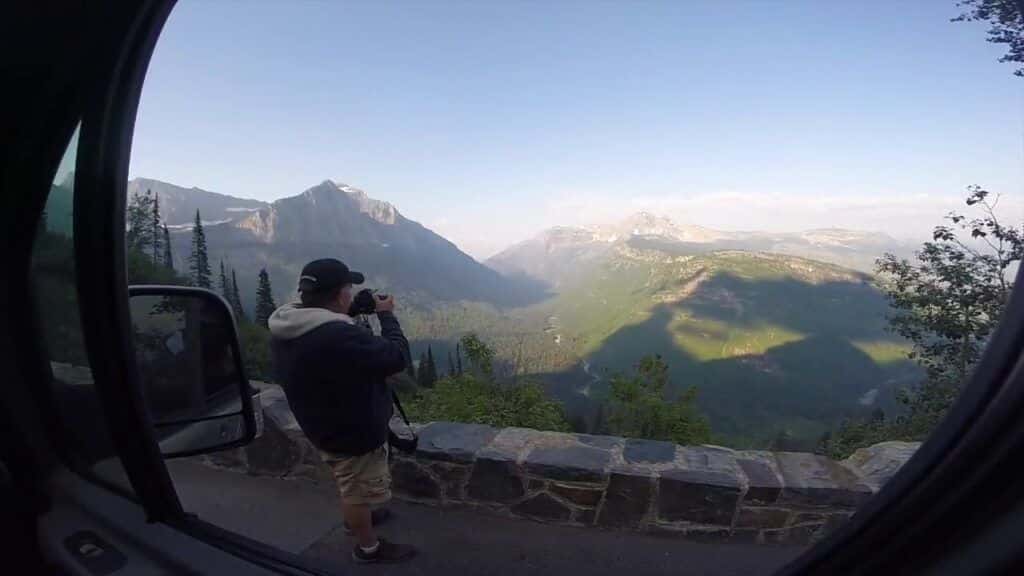
One of the biggest misconceptions about RVing is that everyone is chasing the same dream. They're not. The old stereotype was simple: retire, sell the house, buy a motorhome, and disappear into the sunset forever. Some people certainly do that, but most don't.
Today's retirees often keep their home while taking multiple RV trips throughout the year. They spend a month exploring New England in the fall. Six weeks in Arizona during the winter. Two weeks with grandchildren in another state. A slow drive down the Blue Ridge Parkway in spring.
The RV becomes a second home rather than a replacement home. And that flexibility has become one of the lifestyle's greatest strengths.
Older RVers Are Keeping Their Coaches Longer
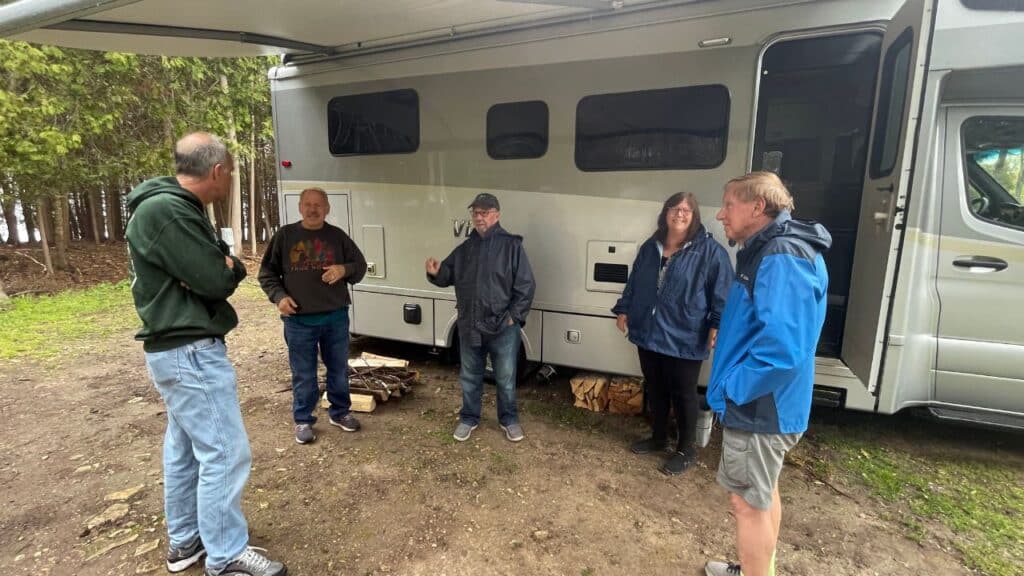
One of the biggest trends we've been covering recently is something happening throughout the RV industry. People are keeping their RVs much longer. Part of that is economics. New RV prices have climbed dramatically over the past decade. Interest rates remain higher than many buyers would like.
But there's another reason. Today's RV owners are investing in upgrades instead of replacements. Lithium batteries. Solar systems. Quieter inverter-driven air conditioners. Improved suspension. TPMS tire monitoring systems. Better mattresses. Modern electronics.
Instead of trading in a perfectly good RV, many owners are simply making it better. It's often far less expensive than purchasing a new coach, and it allows owners to customize their RV around the way they actually travel.
For retirees especially, that makes tremendous sense. If your RV already fits your needs, improving comfort and reliability often delivers more value than starting over with a brand-new unit.
Technology Is Making Retirement RV Travel Easier
If you haven't looked at RVs in several years, you might be surprised by how much they've changed. Navigation has improved dramatically. Trip planning apps now help build efficient routes while avoiding low bridges, weight restrictions, and difficult roads. Cloud-based maintenance trackers make it easy to remember oil changes, generator service, water filter replacements, and warranty repairs.
Starlink has transformed internet access for thousands of travelers who previously struggled to stay connected in remote locations. Even campground reservations have become easier through online booking systems that didn't exist a decade ago. Technology isn't replacing adventure. It's removing many of the frustrations that once discouraged people from traveling.
Comfort Has Become the New Luxury
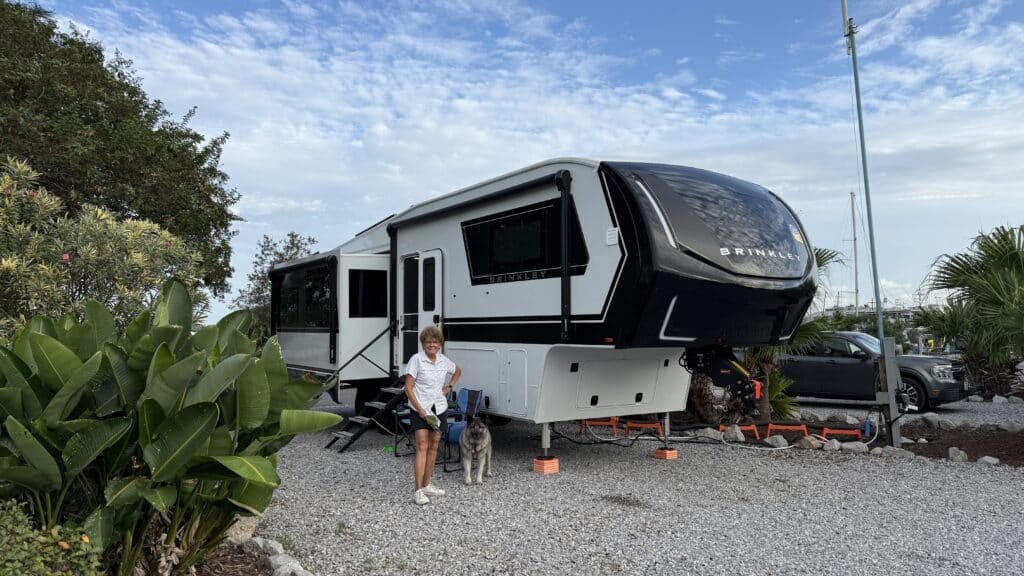
Luxury used to mean marble countertops and expensive finishes. Today's RVers often define luxury differently. A quieter air conditioner. A comfortable mattress. Reliable internet. Good lighting. Excellent climate control. Power systems that let them camp longer without worrying about electricity.
These practical improvements make longer trips more enjoyable, particularly for travelers in their 60s, 70s, and beyond. The best RV isn't necessarily the biggest or the most expensive. It's the one that encourages you to keep traveling.
The Real Benefit Isn't the RV
People often ask us what our favorite RV is. That's actually the wrong question. The RV itself isn't the destination. It's simply the vehicle that makes experiences possible.
We've watched the sunrise over Acadia National Park. Shared campfires with complete strangers who quickly became friends. Spent evenings watching waves crash along the Oregon coast. Visited tiny Midwestern towns we'd never have discovered from an interstate. Celebrated holidays with family hundreds of miles away without worrying about hotel reservations.
Those memories aren't created because of an RV. They're created because an RV makes saying “yes” to adventure much easier.
Community May Be the Greatest Surprise
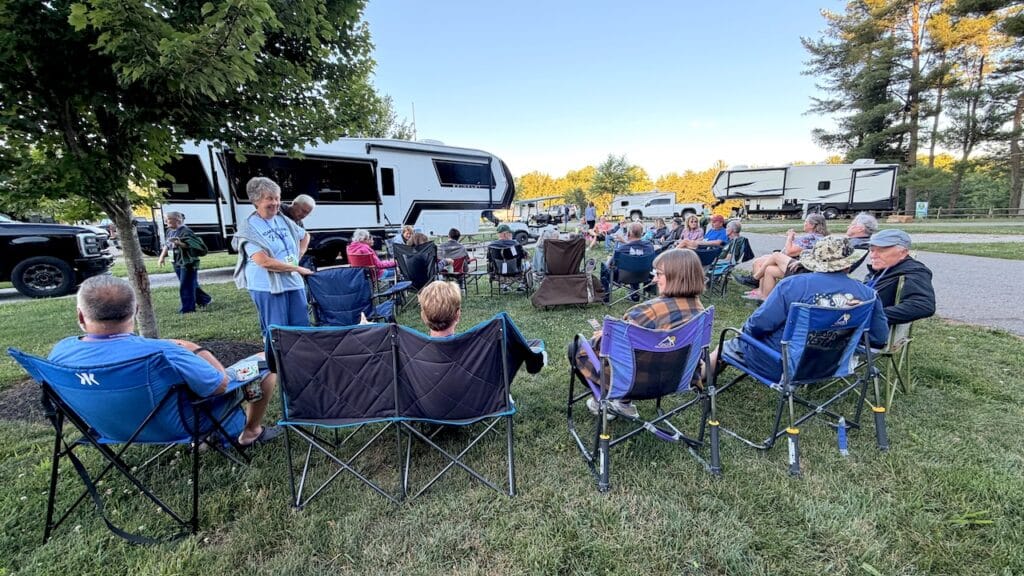
Perhaps the biggest surprise for new RVers isn't the scenery. It's the people. Campgrounds remain one of the few places where strangers still strike up conversations simply because they parked next to each other.
Need help backing into a campsite? Someone will probably offer. Wondering where to find the best pie in town? Ask your neighbor. Having trouble with your water connection? Odds are someone nearby has already solved the exact same problem. That willingness to help one another remains one of the defining characteristics of the RV lifestyle.
It's something that rarely makes headlines, yet it's one of the reasons so many people stay with RVing long after they buy their first coach.
It's Never Been Easier To Learn
Years ago, becoming an RVer meant learning through trial and error. Sometimes expensive trial and error. Today, new owners have access to thousands of instructional videos, online communities, maintenance guides, podcasts, route planners, checklists, and educational resources.
That dramatically shortens the learning curve. It also gives people the confidence to begin. Fear of making mistakes keeps many would-be RVers parked at home. Knowledge removes that fear.
Why We Wrote This eBook

Over the years, we've answered thousands of questions from readers, podcast listeners, YouTube viewers, and members of our RV community.
Which RV should I buy? Should I choose a trailer or a motorhome? How much does RV travel really cost? Is boondocking safe? What maintenance actually matters? How do you stay connected on the road? What changes as you get older?
Those same questions appeared again and again.
Eventually, we realized people didn't need another glossy coffee-table book filled with beautiful campground photographs. They needed practical, honest guidance.
That's exactly what The Complete Guide to RVing in Retirement delivers.
Rather than trying to convince readers that every day on the road is perfect, we explain both the rewards and the realities. We discuss choosing the right RV, planning trips, budgeting, campground etiquette, technology, maintenance, safety, and the lifestyle decisions that matter most, especially for those entering retirement.
Whether you're buying your first RV, returning after years away, or simply wondering whether the lifestyle is right for you, our goal is to answer the questions we hear every week from real travelers.
The Best Time May Be Right Now
None of us knows how many healthy years we'll have available to explore. That's why one of the most common comments we hear from experienced RVers is surprisingly consistent. “I wish we had started sooner.” Not because they regret working. Not because they regret raising a family. Because they discovered that meaningful travel doesn't require crossing an ocean or checking into a luxury resort. Sometimes it begins by driving a few hours from home, opening the campsite door, pulling out a couple of chairs, and watching the sun set somewhere you've never been before.
Retirement doesn't have to be about slowing down. For many people, it's the beginning of a new chapter filled with curiosity, discovery, friendships, and unforgettable experiences. If you've been thinking about the RV lifestyle, there's never been a better time to learn what it really involves, or a better time to start planning your own adventures.
Our hope is that The Complete Guide to RVing in Retirement helps you make those decisions with confidence, avoid costly mistakes, and spend less time worrying about the “what ifs” and more time enjoying the journey.
Because the best RV isn't the newest one. The best trip isn't necessarily the longest one. And the best years for exploring America may still be ahead of you.
The Complete Guide to the RVing Lifestyle is now available at RVLifestyle.com/RetirementGuide, where you'll find complete details, sample chapters, and ordering information.
Here's the NEW eBook from Mike and Jennifer everyone's talking about!
The Complete Guide to RVing in Retirement
“Mike & Jennifer are the real deal! They're who we turned to when considering the RV lifestyle,
and their perspective comes from real experience.”
– Marc and Trish, Keep Your Daydream
What's inside this 127-page ebook:
What to expect at every age, from the Bucket List Years to Still Rolling at 85+
The 330 Rule and smarter RV pacing
Choosing an easier RV, not just a smaller one
Financial strategies for RVing on a fixed income
How to handle a medical situation on the road
RVing when one spouse slows down first
Real stories: a 100-year-old still driving his own motorhome, a 95-year-old planning his fourth trip to Alaska
and so much more!
“As someone who's known Mike and Jennifer for years, I can tell you this book comes from a place of genuine experience and passion for the RV lifestyle. It doesn't try to sugarcoat the challenges, but it also reminds you that getting older doesn't mean the adventure has to end. I enjoyed reading it and would definitely recommend it to anyone planning to spend their retirement on the road.” – Robert Morales, TravelingRobert.com


555
Can you please send the link for the print version of this book? Thanks.
⛏ +2.84567482 BTC. GET =>> graph.org/Mining-08-27-2?hs=10974f256a2db18dda75b5dde9b1887a& ⛏
Do you sell the guide to rving in retirement on kindle? I do not want to read on my phone.