
RV Tour Uncovers the Horrors of History: Vicksburg and Natchez, MS

Our Fantasy RV Tour tracing the Mississippi River from its source in Northern Minnesota had us stop in Vicksburg, MS, the site of one of the Civil War's most decisive battles and the cruelest campaign, which put an entire town under siege and starved it into surrender.
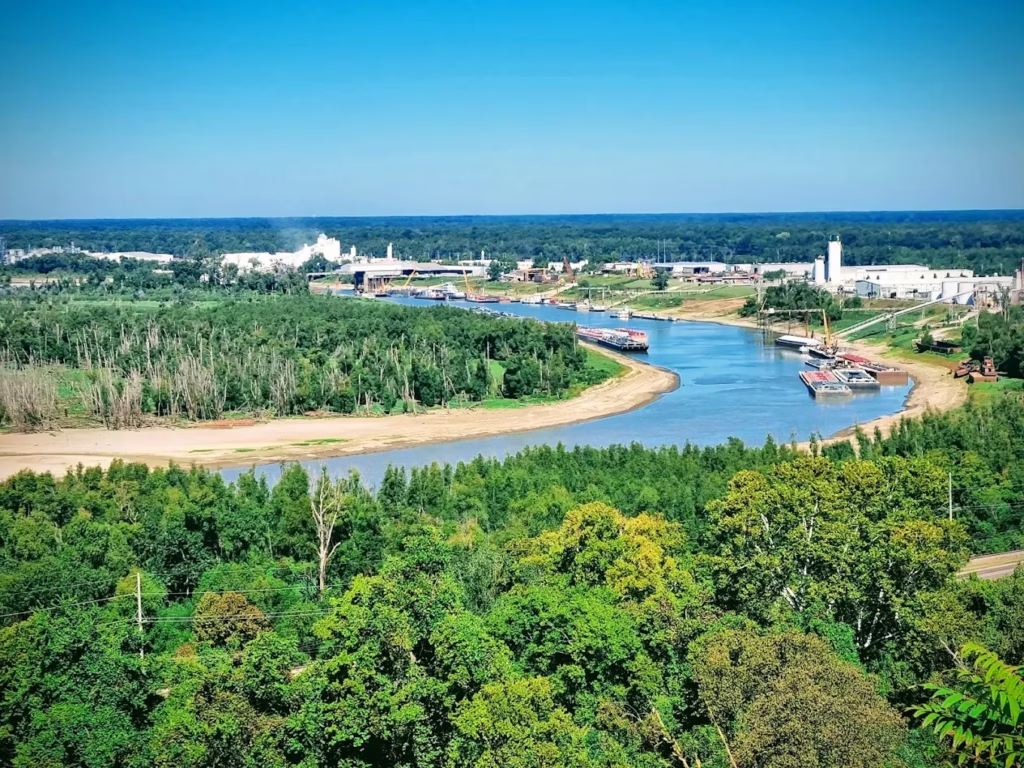
We spent the morning aboard a tour bus, visiting the Vicksburg Military Park and the National Cemetery there, A tour guide who pointed out the highlights of the battles that played out on the lush hills and hollows just outside our bus window. Canons and military markers lined the park's roadway.
President Lincoln himself called Vicksburg the “Key to the South,” and when you look at where it sits – perched high on those bluffs overlooking the Mississippi River – you totally understand why. Whoever controlled Vicksburg basically controlled the entire river, which was like controlling the superhighway of the 19th century.
Jefferson Davis, the Confederate President, had his own way of describing it. He said Vicksburg was the “nailhead that holds the South's two halves together.” The Confederacy desperately needed to keep control of the Mississippi to move troops and supplies between their eastern and western territories. Without Vicksburg, that nail would pop out and everything would fall apart.
Horrors of History in Vicksburg
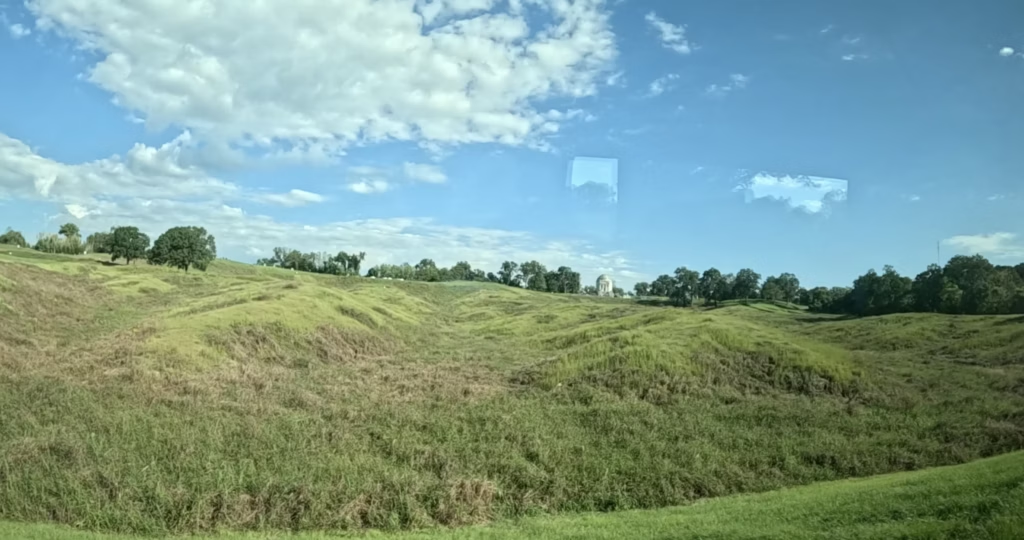
Here's what much of the battlefield looked like. The Confederates were dug in on top of the ridge in the rear. The Union canons were about where I was when I took this photo from the bus.
And that's exactly what happened. The Union knew how critical this city was, so they laid siege to Vicksburg for 47 days in 1863.
The people and soldiers here held out for over a month and a half, bombarded constantly, running out of food and supplies. People were digging caves into the hillsides – they called them “bombproofs” – just to survive the relentless shelling.
When the city finally surrendered on July 4th, 1863 – just one day after Gettysburg – it was more than devastating. Grant captured nearly 30,000 Confederate soldiers who surrendered that day. The Union now controlled the entire Mississippi River, and the Confederacy was literally cut in two, just like Davis had feared.
Resentment and anger simmered in Vicksburg for decades after that war. Our tour guide said the city refused to celebrate the nation's 4th of July birthday again until the 1940s.
The human cost of Vicksburg was staggering. During the entire campaign from March through July 1863, which included all the battles leading up to the siege, about 10,142 Union soldiers and 9,091 Confederate soldiers were killed or wounded.
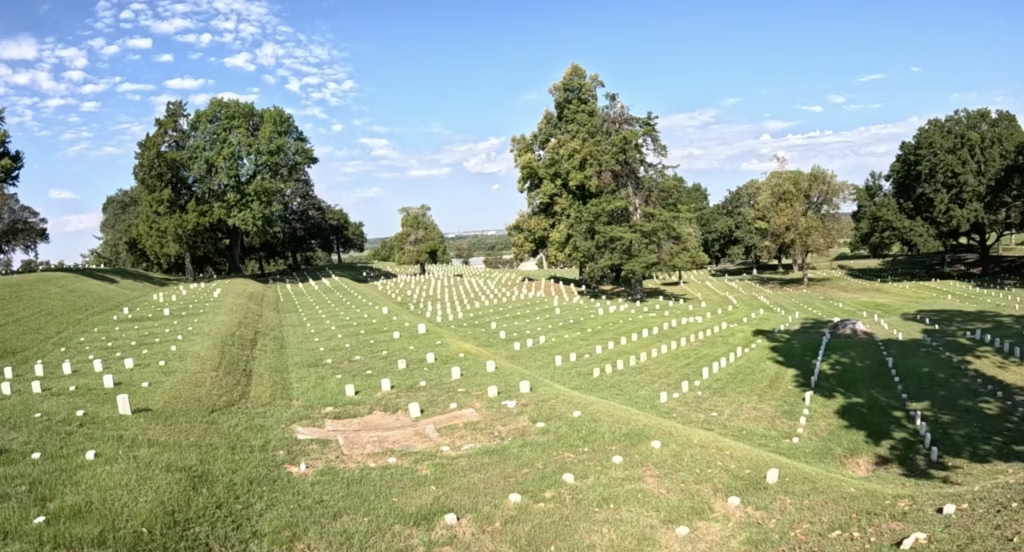
Walking through Vicksburg National Cemetery really brings home what that means. The cemetery covers 116 acres and contains over 17,000 Union soldiers.
Here's what really got me – nearly 13,000 of those graves are marked simply as “unknown.” Just small square blocks with a grave number.
That's 75% of the Civil War dead here with no names, no hometowns. Thousands of men who died so far from home, and their families never even knew exactly where they were buried, or got to say a proper goodbye.
Confederate soldiers are buried separately in Cedar Hill Cemetery in town, in a section called “Soldiers' Rest” – an estimated 5,000 of them, with about 3,500 also unknowns.
One of the most amazing things you'll see at Vicksburg National Military Park is the USS Cairo. It's the actual ironclad gunboat that sank in the Yazoo River (which flows into the Mississippi near Vicksburg) back in 1862. These ironclads were pretty revolutionary for their time, flat-bottomed boats covered in two-and-a-half-inch thick iron plating that sailors nicknamed “Turtles.”
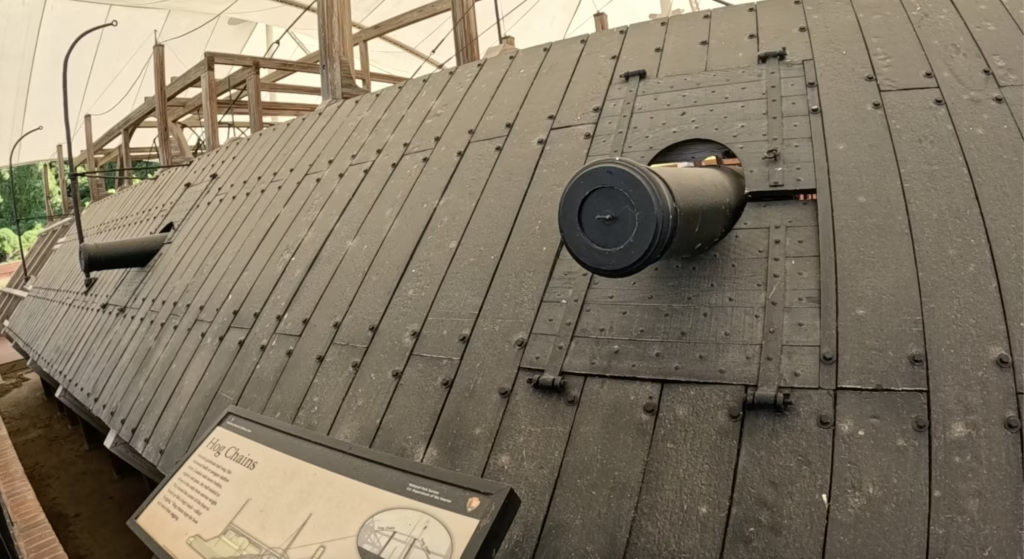
Look at how formidable the iron plating is in this photo I took today. The problem was that the iron plating didn't extend past the waterline.
On December 12, 1862, the Cairo was steaming up the Yazoo River when it hit two Confederate “torpedoes” – what we'd call mines today. The boat sank in just 12 minutes, though thankfully, the crew all made it out safely. The Cairo settled into the muddy river bottom and just disappeared for over a century.
In the 1950s, a historian working at the park started searching for it, and they finally found it buried in the mud and raised it in the 1960s. That river mud actually preserved it remarkably well, along with tons of personal belongings from the crew.
Now you can walk right up to it at the park and see the actual vessel, plus there's a museum displaying all those artifacts – everything from sailors' personal items to weapons and supplies. It's like a time capsule from 1862, giving you this incredibly intimate glimpse into what life was like for those Union sailors on the river.
Standing here among all those graves, looking out over the Mississippi River that so many men fought and died to control – it really brings home the true cost of that “Key to the South.”
These weren't just strategic military moves on a map; these were real people with families waiting for them back home. It's one of those moments where geography really shaped history, and you can see exactly why this spot mattered so much.
Why it still matters.
The tour continues. The next town on our way south is Natchez, MS. And here we find even more horrors of history.
Natchez stands as one of the wealthiest towns in the antebellum South, a place where grand mansions still line the bluffs overlooking the Mississippi River. Before the Civil War, this small city boasted more millionaires per capita than anywhere else in the United States.
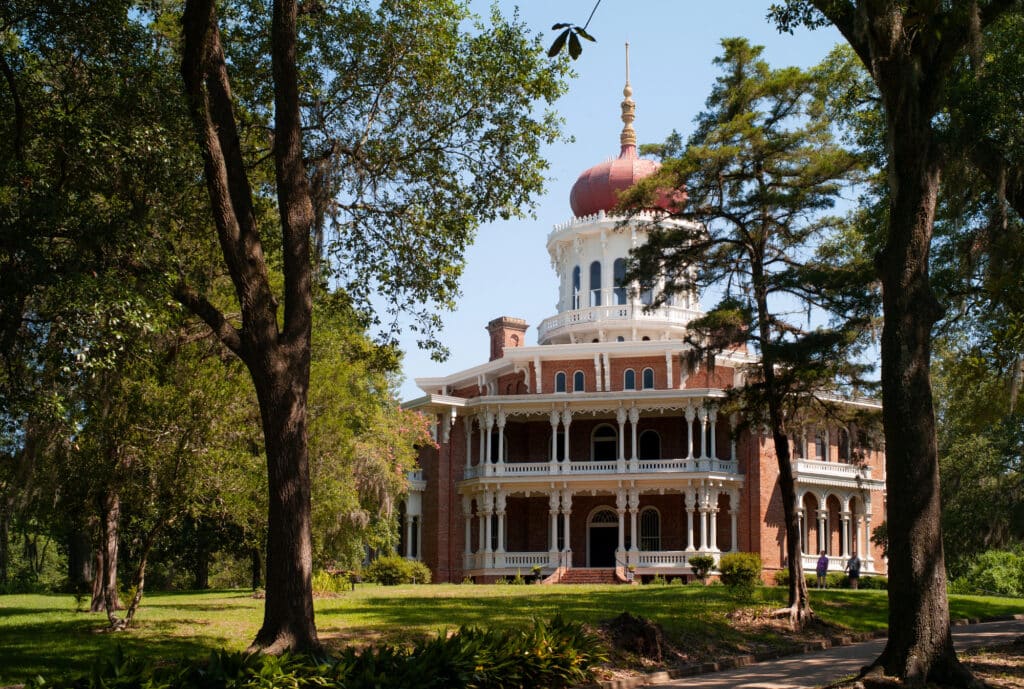
The source of this extraordinary wealth was cotton, and the fertile lands surrounding Natchez produced enormous quantities of this cash crop. Plantation owners built palatial estates with names like Longwood, Rosalie, and Stanton Hall, filling them with imported furniture, crystal chandeliers, and fine art from Europe. The architectural splendor that remains today draws tourists who marvel at the Greek Revival columns and manicured gardens, tangible evidence of the immense fortunes accumulated in this Mississippi River port town.
However, this wealth came at a horrific human cost.
Natchez was home to the second-largest slave market in the Deep South, where thousands of enslaved people were bought and sold like property. The cotton that generated such tremendous wealth was harvested by enslaved workers who endured brutal conditions, forced labor, and the constant threat of being separated from their families.
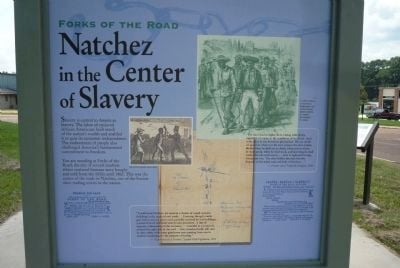
The Forks of the Road slave market in Natchez was a major hub in the domestic slave trade, where people were inspected, evaluated, and auctioned off to the highest bidder.
The magnificent homes that symbolize Natchez's prosperity were built and maintained by enslaved labor, and every dollar of the town's antebellum wealth was extracted through this system of oppression.
Today, Natchez grapples with how to tell its complete story, acknowledging both the architectural beauty that draws visitors and the devastating human suffering upon which that beauty was built.
History has plenty of horrors.
Here's a video on our Fantasy RV Tour of Vicksburg and Natchez:
Here's a story on Natchez from a previous visit we made featuring more about the mansions.
Catch up on The Great River Road series:
- The Great River Road: An Inauspicious Start to An Epic RV Adventure
- Along the Great River Road – to the Twin Cities
- The Amana Colonies: From Commune to Tourist Attraction
- Hannibal, MO: Mark Twain, Tom Sawyer and the River
Life’s Best Chapter Starts Here
in the RV Community

You’ve raised the kids. Done the 9-to-5. Now it’s your time.
Join a private, ad-free community built just for RVers who crave connection, adventure, and meaningful conversation.
- In-person meetups & rallies
- Twice a week member only livestreams and Virtual Campfires that are pure fun
- Exclusive courses on mastering the RV lifestyle
- Real people. No drama. No ads.
- Special interest spaces for more than two dozen RV subjects
Because the open road is better with friends. Check it out here https://RVCommunity.com

