
Wandering the Waterways: A Bayou Adventure Outside New Orleans
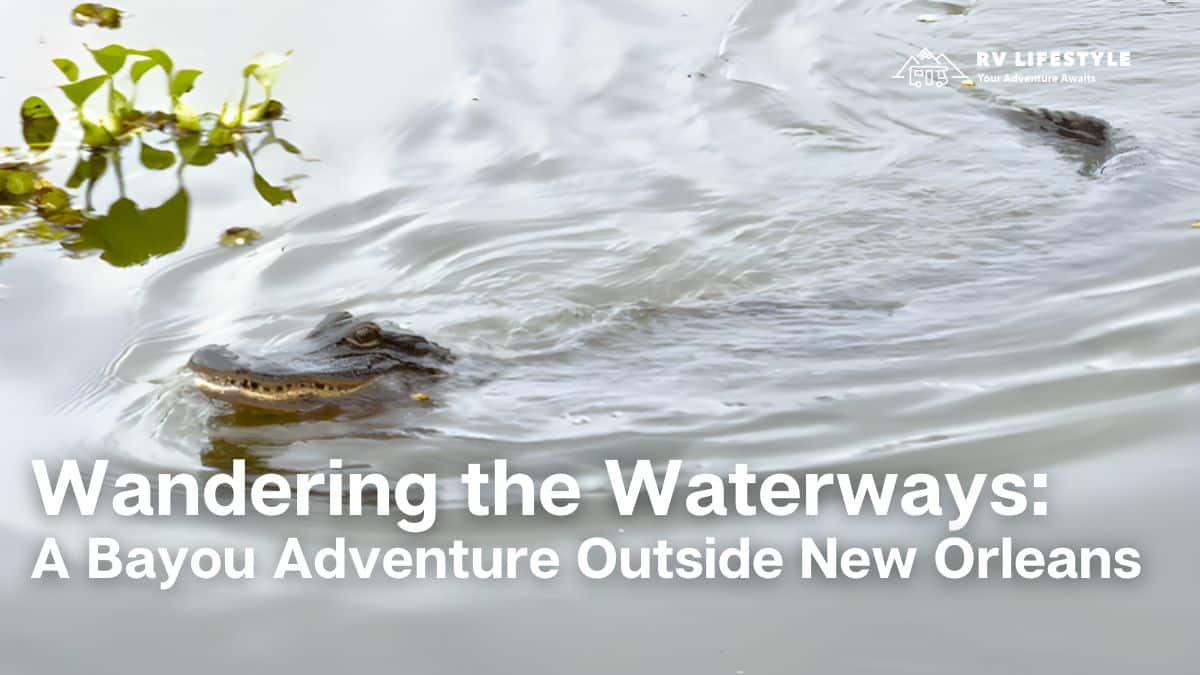
On again, off again showers from a tropical wave that moved into the area overnight were dappling the water when we climbed aboard our swamp boat yesterday, ready to explore one of Louisiana's most mysterious and beautiful landscapes.
The Jean Lafitte Swamp Tour, named after the legendary pirate who once haunted these waters, promised us an intimate look at the bayous and wetlands that define southern Louisiana, and it more than delivered on that promise. Three dozen of us from our Fantasy RV Tour of the Mississippi boarded a flat-bottomed aluminum boat, glad for a roof to keep out the sudden cloudbursts.

Into the Green Cathedral
As we pushed away from the dock, we entered what I can only describe as a green cathedral. Ancient cypress trees rose from the dark water like weathered pillars, their massive trunks flaring at the base to anchor themselves in the saturated soil. But what truly took my breath away was the Spanish moss draped from every branch, hanging in silvery-green curtains that swayed gently in the humid breeze.

This moss, despite its name, isn't actually moss at all, as I'd later learned from a bit of research. It's an air plant, an epiphyte that draws its nutrients from the air and rain rather than from the trees it clings to. In the dappled sunlight filtering through the cypress canopy, it looked almost ethereal, transforming the swamp into something from a fairy tale.

The water itself was as dark as strong coffee, stained by tannins from decaying vegetation. Yet far from being lifeless, these waters teemed with activity. Water tupelo and bald cypress competed for space, their knobby “knees” breaking the surface like wooden stalagmites. Clusters of bright green duckweed floated in the calmer corners, while water lilies opened their blooms to the warming sun.
Meeting the Locals
Then came the moment everyone was waiting for: the alligators.
Our guide cut the engine and reached into a bag, pulling out, of all things, marshmallows. “Watch this,” he said with a grin, tossing the white puffs onto the water's surface. Within seconds, ridges appeared in the water, ancient eyes and armored backs breaking the surface as several alligators glided toward us with surprising grace.
These prehistoric creatures are perfectly adapted to bayou life. Their dark coloring helps them absorb heat on cool mornings and blend into the shadowy waters when hunting. We watched, mesmerized, as a seven-footer snapped up marshmallows with surprising delicacy, those powerful jaws capable of crushing bone instead gently plucking sugary treats from the surface.

The guide explained that while feeding them marshmallows might seem odd, it's actually safer than using meat, which can reinforce hunting behaviors. Still, he was quick to remind us that these are wild animals deserving of respect and distance. The adult alligators we saw could easily be 30 to 50 years old, living links to a Louisiana that existed long before highways and RV parks.
The River's Invisible Hand
Here's what amazed me most: the Mississippi River was nowhere in sight. We were at least a dozen miles from its main channel, yet its influence was everywhere.
The Mississippi is the great architect of this landscape, though you'd never know it from our vantage point deep in the swamp. For thousands of years, the river has flooded and receded, deposited sediment and carved new channels, building the very land beneath these waters. Every spring, before the levees were built, the Mississippi would overflow its banks, spreading nutrient-rich silt across the floodplain and creating the fertile wetlands that sustain this incredible ecosystem.
Even now, with the river constrained by human engineering, its freshwater pulses through a network of bayous, distributaries, and channels, mixing with the brackish water pushing in from the Gulf of Mexico. This creates a unique gradient of salinity that supports an astonishing diversity of life. Where we were floating, the water was fresh enough for cypress but influenced by tidal patterns connected to the Gulf, dozens of miles to the south.
The river brings more than water. It carries nutrients: nitrogen, phosphorus, and organic matter washed down from 31 states and two Canadian provinces. This continental-scale delivery system feeds the algae and plankton that form the base of the food web. Those microscopic organisms feed small fish and invertebrates, which in turn feed larger fish, wading birds, and yes, alligators.
An Ecosystem in Balance
The bayous and swamps of southern Louisiana are among the most productive ecosystems on Earth. These wetlands serve as nurseries for countless species: shrimp, crabs, and fish that will eventually make their way to the Gulf. The dense vegetation filters pollutants from the water. The swamps absorb storm surge during hurricanes, protecting communities like New Orleans from even worse flooding. The peat and muck beneath the water stores carbon, helping to mitigate climate change.
But this ecosystem faces serious threats. Subsidence – the gradual sinking of the land – is accelerated by the very levees that protect communities from floods. Without regular sediment deposits from the Mississippi, the land is literally disappearing beneath the waves. Louisiana loses a football field's worth of wetlands every 100 minutes. Rising sea levels push saltwater farther inland, killing freshwater plants and trees.
Many of the cypress trees we were admiring are in danger of dying as subsidence threatens to turn them into their gray skeletons, standing as monuments to the changing balance of this ecosystem. It's happening across Louisiana's wetlands. The battle to save them is really a battle to maintain the connection between the river and its natural floodplain, to let the Mississippi do what it has done for millennia: build land.
Legends and Lore of the Bayou
There was so much to absorb during our brief time in the swamp, and I found myself wishing we had days to dig deeper into the layers of culture and mystery that define southern Louisiana.
The Cajun culture here is unlike anything else in America. Descended from French-speaking Acadians who were expelled from Canada in the 18th century, the Cajuns built a life in these swamps and bayous, adapting Old World traditions to New World landscapes. Their influence permeates everything: the spicy, soulful food that makes New Orleans famous, the accordion-driven zydeco music spilling from corner bars, the French patois still spoken by older residents in remote communities.
I caught glimpses of this culture everywhere, from the crawfish boils advertised on handwritten signs to the accent of our swamp tour guide. There's a whole world of tradition here, of recipes passed down through generations, of festivals celebrating everything from gumbo to sugarcane, of a people who turned exile into resilience and built something beautiful in the process.
And then there are the stories. Louisiana's bayous are thick with folklore, tales whispered around campfires and porches for generations. One of the scariest is the Rougarou, a werewolf-like creature said to prowl the swamps after dark, hunting those who break Lent or misbehave.

But the Rougarou is more than just a monster story. It's a cautionary tale rooted in Cajun Catholic tradition, a way of teaching moral lessons and keeping children close to home after nightfall. Some versions say the Rougarou was once human, cursed to spend 101 days in beast form, and that the curse can only be broken if someone else discovers the creature's identity, thus passing the curse along. In a landscape where the line between land and water blurs, where mist obscures familiar landmarks and Spanish moss creates dancing shadows, it's easy to see how such legends took root and flourished.
Then there's the phenomenon locals call “feux follets,” or fool's fire, though some English speakers refer to the experience as “ghostlights” or describe the unsettling act of witnessing them as encountering something otherworldly. Picture this: you're out on the water at dusk, and suddenly you see lights dancing across the surface, bobbing and weaving through the cypress trees like lanterns carried by invisible hands.
These mysterious illuminations, often attributed to swamp gas igniting or bioluminescent organisms reacting to disturbances in the water, have sparked countless legends and ghost stories. Some say they're the souls of unbaptized children, forever wandering the swamps. Others claim they're the lanterns of the Rougarou, hunting for victims. Fishermen tell tales of following the lights, thinking they've spotted another boat, only to find themselves hopelessly lost in unfamiliar channels. Scientists offer rational explanations involving methane and phosphorescence, but when you're alone on dark water and those lights begin their eerie dance, logic feels a lot less comforting than it should.
I wish we'd had time for a night tour, to see if those lights would make an appearance, to feel the bayou transform from a green cathedral into something stranger and more primal. I wish we'd had time to sit down with local storytellers, to hear the tales with a proper Cajun accent, to understand how these legends have evolved and endured.
But perhaps that's the nature of the RV Lifestyle of travel: it shows you just enough to make you hungry for more, to make you promise yourself you'll return someday with more time and deeper questions.
Winding Down in New Orleans
As we motored back to the dock, the sun was poking through the clouds, and the humidity was building. I took off my rain jacket, grateful that the infamous Louisiana mosquitoes had not shown themselves on our boat tour through their habitat. We felt privileged to have spent time in a landscape so different from anything else in America.
Now we're back in the campground in New Orleans, on the edge of Lake Pontchartrain and not far from the very river that creates and sustains those mysterious bayous. This morning, we'll enjoy some beignets and a tour of the French Quarter.
Soon, we head off on our separate ways as the tour comes to an end after 34 days. We've followed this mighty river from north to south, witnessing its power and subtlety, and seen the communities it shapes and the landscapes it builds. But I know when I think of the Mississippi, among all those other memories, I'll also be thinking about those dark waters and hanging moss for a long time to come.
The bayous taught me something important: not all power is visible. The Mississippi shapes this landscape from afar, through invisible channels and patient, persistent flows. It reminds me that we're all connected to forces larger than ourselves, and that the most profound influences on our lives are often the ones we can't directly see.
Catch up on The Great River Road series:
- The Great River Road: An Inauspicious Start to An Epic RV Adventure
- Along the Great River Road – to the Twin Cities
- The Amana Colonies: From Commune to Tourist Attraction
- Hannibal, MO: Mark Twain, Tom Sawyer and the River
- RV Tour Uncovers the Horrors of History: Vicksburg and Natchez, MS
Life’s Best Chapter Starts Here
in the RV Community

You’ve raised the kids. Done the 9-to-5. Now it’s your time.
Join a private, ad-free community built just for RVers who crave connection, adventure, and meaningful conversation.
- In-person meetups & rallies
- Twice a week member only livestreams and Virtual Campfires that are pure fun
- Exclusive courses on mastering the RV lifestyle
- Real people. No drama. No ads.
- Special interest spaces for more than two dozen RV subjects
Because the open road is better with friends. Check it out here https://RVCommunity.com

