Boondocking 101: What Campground-Only RVers Get Wrong
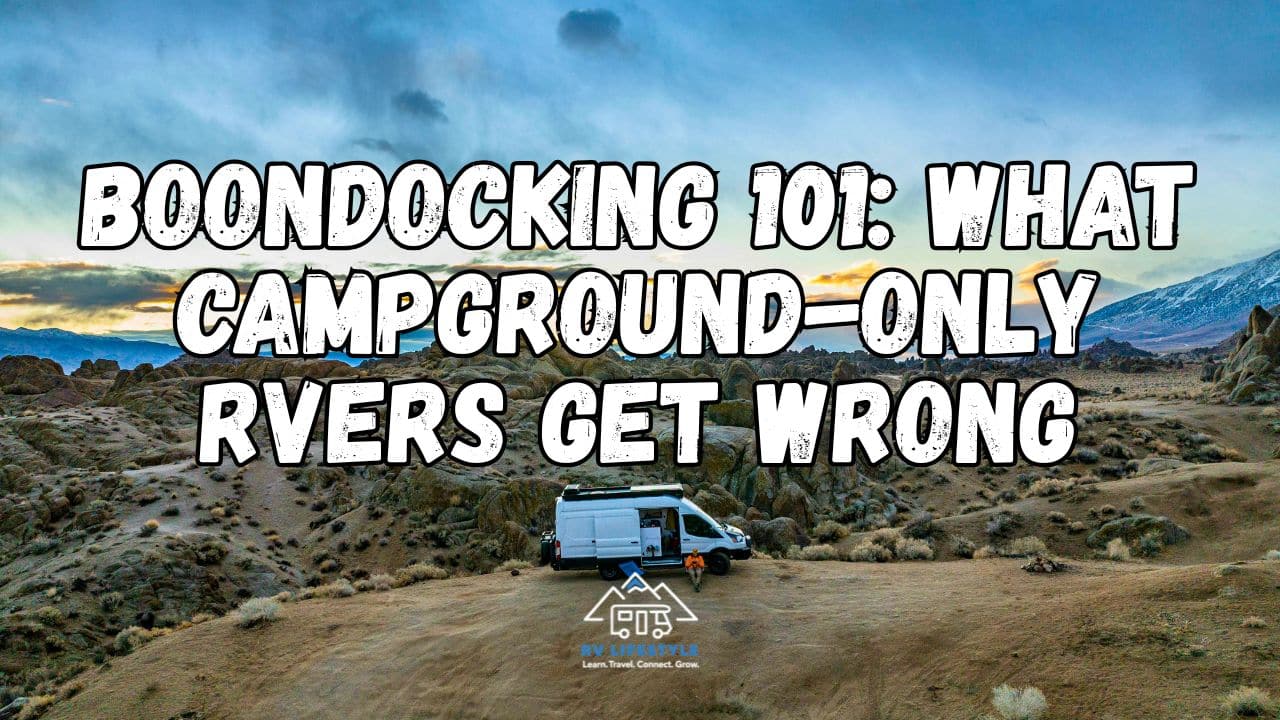
If you have only ever camped with full hookups, boondocking sounds intimidating the first time someone mentions it. No water hookup. No sewer. No shore power. To a campground-only RVer, that can sound like camping without a safety net.
It's not. It is camping with a different set of skills, and once you learn them, a whole new category of places opens up to you. Public land across the West alone offers millions of acres of free or nearly free camping that most RVers never touch simply because they never learned how.
Let me walk you through what actually changes when you go off grid, because it is less dramatic than it sounds.
Water for Boondocking
Water is the first thing people worry about, and it is also the easiest to plan for. Your fresh water tank becomes your water utility for the length of the stay. Most RVs hold somewhere between 30 and 100 gallons, and with reasonable conservation, a couple can stretch that for 4 to 7 days depending on tank size and habits. Shorter showers, running the tap less while washing dishes, and using disposable dishware for a night or two all extend your range. If you are boondocking regularly, adding a portable water bladder you can refill at a nearby spigot or town extends your stay indefinitely without moving the whole rig.
Power for Boondocking
Power is the second concern, and this is where boondocking has gotten dramatically easier over the last several years. Solar panels paired with a lithium battery bank have replaced the noisy generator as the default setup for serious boondockers. A modest 400 to 600-watt solar system with a few hundred amp-hours of lithium storage will run your fridge, lights, water pump, and basic electronics comfortably through most of the year in decent sun. If you plan to run air conditioning off-grid, that is a different and much bigger conversation involving either a generator or a very large battery and solar investment, so be honest with yourself about your actual power needs before you buy gear.
Waste Concerns for Boondocking
Waste management is the part that stops people cold, and it does not need to. Your black and gray tanks work exactly the same as they do at a campground. The only difference is you are watching your tank levels instead of an unlimited sewer connection, and you plan your trip length or your dump run around those levels instead of ignoring them. A tank monitor system, even a basic one, removes most of the guesswork.
Here is what I actually want new boondockers to understand, because it is the part that matters more than the gear list. Boondocking is a mindset shift from unlimited consumption to managed consumption. That is genuinely it. Everything else is logistics you learn in your first two or three trips.
A few practical starting points if you want to try it.
Start Where You Are
Start on land you already know how to find easily. Many National Forests and Bureau of Land Management areas allow dispersed camping for free, typically with a stay limit around 14 days, and apps built for finding these sites make your first trip far less stressful than guessing.
Do your first boondocking trip short, two or three nights, before you commit to a full week. You will learn your rig's real water and power consumption fast, and it is much better to learn it close to civilization than three days from the nearest town.
Arrive with a full fresh tank and empty black and gray tanks every single time. This sounds obvious, but it is the single most common rookie mistake: arriving already behind on your resource math.
Respect the land and the rules
Dispersed camping privileges exist because RVers have largely been good stewards of that access. Pack out what you pack in, respect stay limits, and leave sites better than you found them so this kind of camping stays available for the RVers who come after you.
Once you get comfortable with a few short trips, boondocking stops being a challenge and starts being one of the best parts of the RV lifestyle. Free camping with a view no crowded campground could ever offer is not a small thing.
If you want a structured path into this rather than trial and error, our Boondocking and Off Grid Travel Guide breaks down solar sizing, water conservation, and finding legal dispersed sites step by step. You will find it along with our other travel guides at shop.rvlifestyle.com.
For more practical RV skills content like this, sign up for our free daily newsletter at rvlifestyle.com/newletter. It is short, useful, and free.
And if you want direct advice from RVers who boondock regularly, our RV Lifestyle Community is full of people happy to share real-world setups and mistakes so you do not have to make them yourself. Join us at community.rvlifestyle.com.
Life’s Best Chapter Starts Here
in the RV Community

You’ve raised the kids. Done the 9-to-5. Now it’s your time.
Join a private, ad-free community built just for RVers who crave connection, adventure, and meaningful conversation.
- In-person meetups & rallies
- Twice a week member only livestreams and Virtual Campfires that are pure fun
- Exclusive courses on mastering the RV lifestyle
- Real people. No drama. No ads.
- Special interest spaces for more than two dozen RV subjects
Because the open road is better with friends. Check it out here https://RVCommunity.com
TWO Helpful EBOOKS in this RV Lifestyle Bundle!
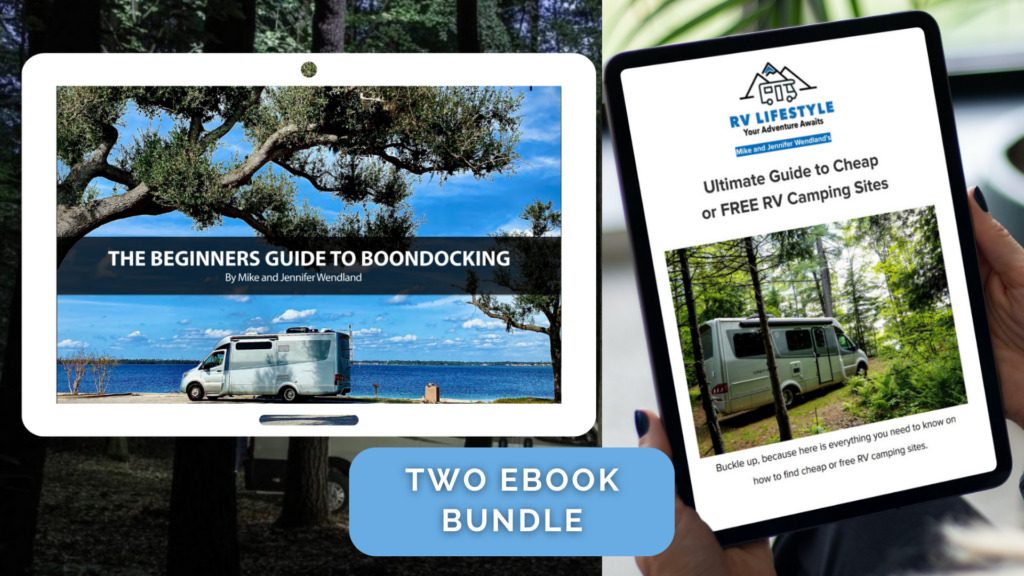
Beginners Guide to Boondocking (one of our most popular ebooks) and one of our newest ebooks, The Ultimate Guide to Free and Cheap RV Camping!
ebook #1: Beginners Guide to Boondocking
We created a 65+-page downloadable digital guide to help you understand the nuances that come with boondocking, the most common boondocking problems, and what you need to do to get your rig “boondocking-ready.”
ebook #2: The Ultimate Guide to Free and Cheap RV Camping
Buckle up because here is everything you need to know on how to find cheap or free RV camping sites in the 33-page EBOOK.

